Ferdinand Heinke
 Poland
- Ferdinand Heinke: Lawyer, Official, and Goethean Acquaintance
- Military Service and Adjutancy
- Weimar Connections
- Friendship with the Von Pogwisch and Schopenhauer Families
- Return to Breslau and Local Service
- Involvement in the Falllersleben Case
Ferdinand Heinke: Lawyer, Official, and Goethean Acquaintance
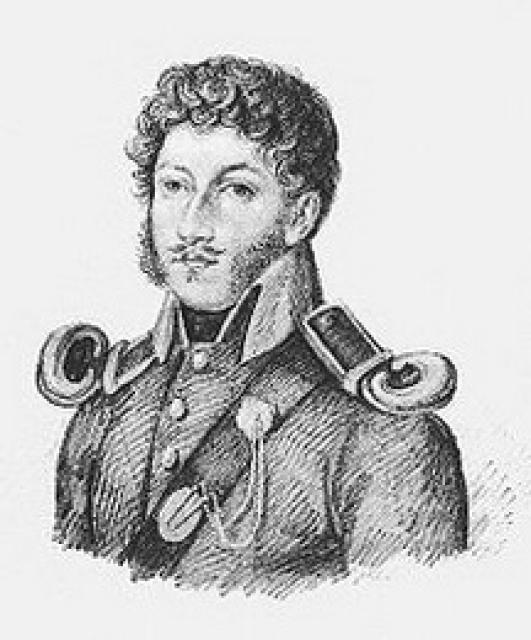
Ferdinand Heinke, the son of a furrier, was a lawyer in Breslau. Inspired by King Frederick William III's call to arms, he joined the Prussian army and fought against Napoleon.
Military Service and Adjutancy
During the Napoleonic Wars, Heinke served in the Silesian Army under Generals Gneisenau and Kleist. In 1813-1814, he became Adjutant to Major Anton von Kleist in Weimar, where he was appointed deputy commandant.
Weimar Connections
While a student in Halle, Heinke met Christiana Vulpius, Goethe's wife. In Weimar, he became acquainted with Goethe and was a frequent guest at his home. He also visited the household of Johanna Schopenhauer and the court of Grand Duke Karl August of Saxe-Weimar-Eisenach.
Friendship with the Von Pogwisch and Schopenhauer Families
Heinke had close relationships with Ottilia von Pogwisch, the future wife of Goethe's son, August, and with her companion Adel Schopenhauer. Their correspondence and Heinke's diary provide insights into these friendships. Thomas Mann featured Heinke as a character in his novel "Lotte in Weimar."
Return to Breslau and Local Service
After the wars, Heinke returned to Breslau, where he served as co-director of the theater. In 1824, he became chief of the local police. He was awarded honorary citizenship in 1831, appointed curator of the university in 1832, and privy counsellor to the university in 1835.
Involvement in the Falllersleben Case
Heinke intervened in the case of the Germanist professor Hoffman von Fallersleben, author of "The Song of the Germans." He reported Fallersleben to the Minister of Cults for critical remarks about government policies. Ultimately, Fallersleben was stripped of his professorship.