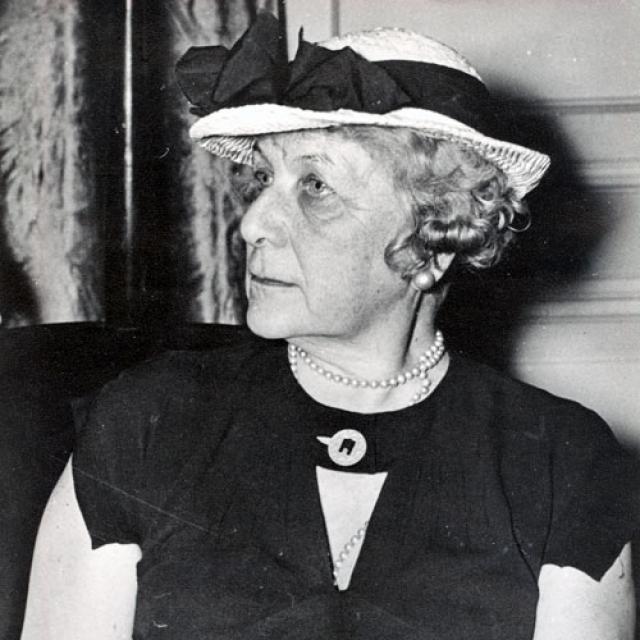
Florence (Daisy) Harriman
 USA
USABiography of Florence Harriman
Florence Harriman was a socialite, suffragist, diplomat, and philanthropist. She was able to surpass the typical role of a beautiful wife of wealthy men and achieve great success in various fields. Born in New York City, Florence grew up in a prominent family as the daughter of a shipping magnate and his wife. Unfortunately, she lost her mother at a young age and was raised by her father, grandfather, and grandmother on her mother's side.
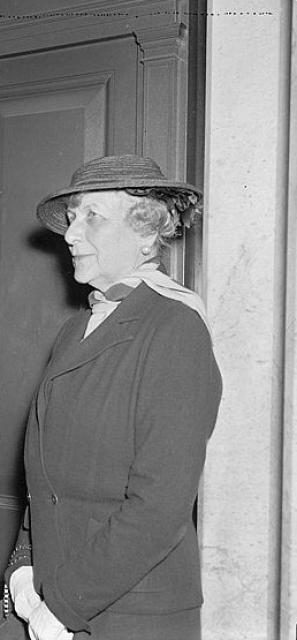
At the age of six, Florence witnessed a political torchlight procession for the first time during the 1876 presidential campaign. In 1889, at the age of 19, she married New York banker J. Borden Harriman. Their wedding was attended by prominent political and financial figures of the time, including Grover Cleveland, Cornelius Vanderbilt, Edward Harriman, John Jacob Astor IV, and John Pierpont Morgan.

In 1897, Florence and her husband welcomed their daughter Ethel, who later became an actress and writer. For many years, Florence lived the life of a typical socialite, primarily interested in charitable and social activities. In 1903, she co-founded the first women's club in New York City with two other socialites. However, unlike other socialites, Florence willingly supported individuals from social groups different from her own.
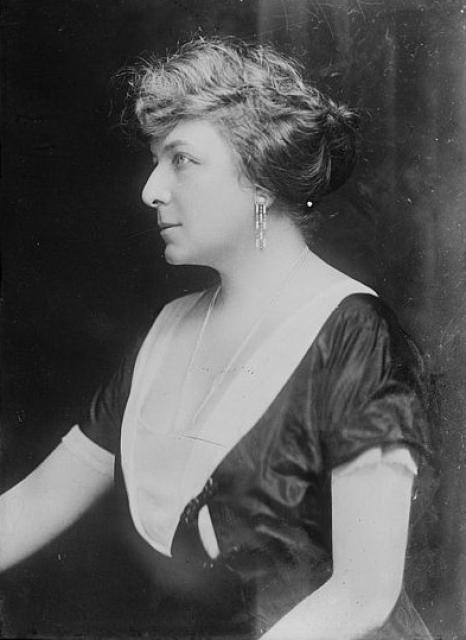
For example, in 1908, she advocated for workers suffering from unbearable conditions in New York City factories, plants, and hotels. In 1909, Florence hosted an entertainment event for hundreds of members of the International Association of Firefighters at her summer home. Her leadership and organizational abilities were increasingly utilized in the interests of those in need.
Florence actively collaborated with suffragists and played a significant role in the fight for women's suffrage. Her involvement in Woodrow Wilson's presidential campaign in 1912 helped her gain nationwide recognition, and she eventually became the first president of the national women's association "Wilson and Marshall." She continued her public activities, working on the Labor Relations Board.
During World War I, Florence and her family were in the heart of Europe. Despite their efforts to restore her husband's failing health in Karlsbad, stress related to the war and attempts to return home worsened his illness, and Florence became a widow in December 1914. She never remarried.
A year later, Florence found herself in the midst of another war, this time in Mexico. She continued her philanthropic work, dedicating one of her homes to a tuberculosis sanatorium and supporting charitable foundations. She also remained an advocate for suffragists.
Engaging in diplomacy, Florence was appointed to Norway, where she found herself during World War II. Thanks in large part to her efforts, American diplomats and members of the Norwegian royal dynasty were able to leave the country and reach safe lands.
Even at the age of 86, Florence continued to lead an active lifestyle and host lavish dinners for 22 people almost every Sunday. She passed away on August 31, 1967, at the age of 97.