Otto Shtrandman
 Estonia
- Early Life and Education
- Legal Career and Political Beginnings
- Political Rise in the Estonian Republic
- State Elder and Later Career
- Tragic End
Early Life and Education
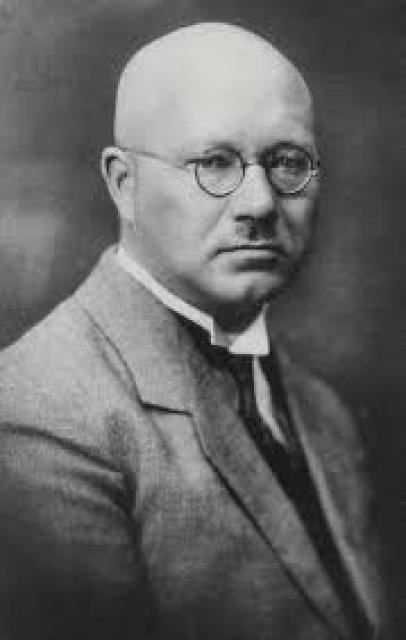
Jaan Tõnisson was born in Vorbuse, Estonia, in 1868. He initially studied at the Faculty of Law at the University of St. Petersburg (1899-1901) before completing his legal studies at the University of Tartu (1903). He was later awarded honorary doctorates from the University of Tartu (1928) and the University of Warsaw (1930).
Legal Career and Political Beginnings
Prior to his university studies, Tõnisson worked at the State Bank in Tallinn. After graduating, he served as a lawyer in Narva and Tallinn from 1903 to 1905. During this time, he was also elected to the Tallinn City Council from 1904 to 1905 and again in 1917. Tõnisson participated in the revolutionary events of 1905 and went into exile in Switzerland from 1905 to 1909. Upon returning, he resumed his legal practice in Tallinn.
Political Rise in the Estonian Republic
Following the February Revolution in 1917, Tõnisson was appointed Public Prosecutor of the Tallinn District Court by the Russian Provisional Government. He played a significant role in the establishment of the Estonian Provisional Government, serving as its Prime Minister and Minister of War from 9 May 1919 to 18 November 1919.
Tõnisson continued to hold senior government positions in the years that followed. He was Minister of Foreign Affairs (1920-1921), Chairman of the Riigikogu (Parliament) (1921), and again Minister of Foreign Affairs (1924), followed by Minister of Finance. He also served as Estonia's Ambassador to Poland, Czechoslovakia, and Romania from 1927 to 1929.
State Elder and Later Career
From 9 July 1929 to 12 February 1931, Tõnisson served as State Elder, a position equivalent to Head of State. In his later years, he held diplomatic posts as Estonia's Ambassador to France, Belgium, Spain, and the Vatican from 1933 to 1939.
Tragic End
In 1939, Tõnisson returned to Estonia and retired to his farm in Kadrina. However, in 1941, he received a summons to appear before the NKVD, fearing imminent arrest. Faced with this, he committed suicide. Tõnisson was posthumously awarded the Order of the Cross of Liberty, Third Class, First Degree, for his civil merits.