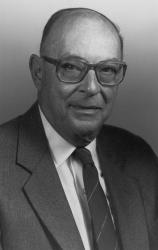
Folfgang Pauli
 Switzerland
- Early Life and Education
- The Genesis of Quantum Physics
- The Copenhagen Period
- The Bohr Model and its Limitations
- Pauli's Contributions to Quantum Theory
- The Pauli Exclusion Principle
- Applications and Implications
- Relativistic Quantum Electrodynamics
- Later Years and Legacy
Early Life and Education
Wolfgang Ernst Pauli, an Austrian-Swiss physicist, was born in Vienna, the son of Wolfgang Joseph Pauli, a renowned physicist and biochemist, and Bertha (née Schütz) Pauli, a writer connected to Viennese theatrical and journalistic circles. His younger sister, Herta, became an actress and writer. Ernst Mach, the celebrated physicist and philosopher, was Pauli's godfather.
At an early age, Pauli exhibited exceptional mathematical abilities, though he found his classroom studies tedious. He switched to self-studying higher mathematics, reading Albert Einstein's recent work on the general theory of relativity on his own.
The Genesis of Quantum Physics
In 1918, Pauli enrolled at the University of Munich, where he studied under the prominent physicist Arnold Sommerfeld. Mathematician Felix Klein commissioned Sommerfeld to write an overview of Einstein's relativity theories, which Sommerfeld assigned to the 20-year-old Pauli. Pauli swiftly produced a 250-page article, which Sommerfeld hailed as "masterly" and Einstein himself praised.
The Copenhagen Period
After earning his doctorate in 1921 with a dissertation on the hydrogen molecule, Pauli moved to Göttingen to collaborate with Max Born and James Franck. Late in 1922, he joined Niels Bohr's institute in Copenhagen as an assistant.
Under the influence of Sommerfeld, Born, Frank, and Bohr, Pauli immersed himself in quantum theory, which sought to understand the atom and subatomic particles.
The Bohr Model and its Limitations
Classical physics could satisfactorily explain the behavior of macroscopic systems, but attempts to apply its principles to atomic-scale phenomena failed. The prevailing model of the atom, with electrons orbiting a central nucleus, faced two pressing problems.
First, electrons should constantly emit electromagnetic radiation while orbiting, losing energy and spiraling into the nucleus. Second, the stability of electron orbits lacked a clear explanation.
Pauli's Contributions to Quantum Theory
In 1925, Pauli proposed that electrons possess an intrinsic property, later called spin, or angular momentum. In a magnetic field, the electron's spin can have two orientations, parallel or antiparallel to the field. This electron spin, combined with its orbital motion, introduces additional energy states within each energy level.
Pauli also explained why all electrons in an atom do not collapse into the lowest energy state. His improved Bohr model defined electron energy states using four quantum numbers for each electron. These numbers specify the electron's energy level, orbital angular momentum, magnetic moment, and (Pauli's contribution) spin orientation.
The Pauli Exclusion Principle
Pauli's most significant contribution was his 1925 formulation of the exclusion principle, which states that no two electrons in a system can have identical sets of quantum numbers. Thus, each atomic shell can accommodate only a limited number of electrons, determined by the permissible combinations of quantum numbers.
Applications and Implications
Pauli's exclusion principle plays a fundamental role in understanding atomic structure, nuclear behavior, metallic properties, and other physical phenomena. It explains the chemical interactions of elements and their periodic organization in the periodic table.
Relativistic Quantum Electrodynamics
Pauli's work extended quantum mechanics to high-energy particle physics and the interaction of particles with light and other electromagnetic fields. This area became known as relativistic quantum electrodynamics.
Later Years and Legacy
In 1928, Pauli became a professor at the Federal Institute of Technology in Zurich, where he remained for the rest of his life, except for two periods in the United States. He served as a visiting lecturer at the Institute for Advanced Study in Princeton from 1935 to 1936 and returned during World War II to head the Department of Theoretical Physics there from 1940 to 1946.
In the 1930s, Pauli proposed the existence of a neutrino to explain the apparent violation of energy conservation in beta decay. The neutrino was eventually confirmed in 1956.
Pauli received the Nobel Prize in Physics in 1945 "for the discovery of the exclusion principle, also called the Pauli principle." He became a Swiss citizen in 1946.
Pauli's brilliant mind and profound insights into physical problems made him one of the most celebrated physicists of his time. His work helped lay the foundation for modern physics and continues to inspire generations of scientists.