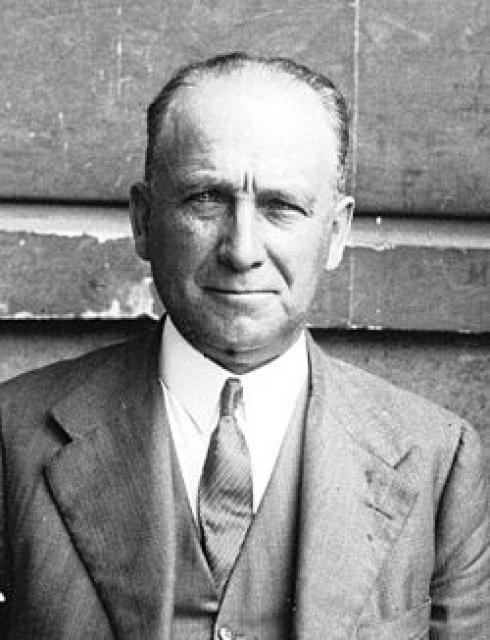
Francisco Largo Caballero
 Spain
Spain- Francisco Largo Caballero: A Spanish Syndicalist Leader
- Ascension to Leadership
- Political Career
- Controversy and Legacy
Francisco Largo Caballero: A Spanish Syndicalist Leader
Early Life and CareerFrancisco Largo Caballero was born in 1869 in Madrid, Spain. He became involved in labor activism at a young age, participating in the first construction workers' strike in 1890. In 1894, he joined the Spanish Socialist Workers' Party (PSOE) and actively participated in union activities.
Ascension to Leadership
Following the death of PSOE founder Pablo Iglesias in 1925, Largo Caballero rose to the top of the party. He became the General Secretary of the General Union of Workers (UGT) in 1918 and played a key role in the 1917 general strike, for which he was imprisoned.
Political Career
During the Second Spanish Republic (1931-1939), Largo Caballero served as Minister of Labor (1931-1933) and Prime Minister (1936-1937). As Prime Minister, he faced the challenges of the Spanish Civil War and attempted to maintain discipline within the Republican army.
Controversy and Legacy
Largo Caballero's alliance with communists and anarchists during the Civil War drew criticism from some within the PSOE. He was also involved in a conflict with the Marxist Unification of Workers Party (POUM) and the anarcho-syndicalist groups CNT and FAI.
Despite his controversial legacy, Largo Caballero remains a significant figure in Spanish political and labor history. He was known as the "Spanish Lenin" due to his popularity among workers. His remains were returned to Madrid in 1978, and a monument was erected in his honor in 1985.