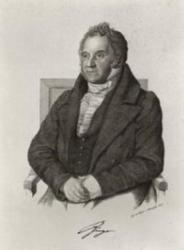
Francois Arago
 France
Early Life and Career
François Victor Emmanuel Arago was born in Paris, France, on June 6, 1812. The eldest son of renowned scientist François Arago and nephew of writer and playwright Jacques Arago, he initially pursued a career in law. After studying jurisprudence, Arago composed theatrical plays until 1837. Subsequently, he embraced law and gained prominence as an attorney in political trials, including the cases of Barbé and Bernard in 1839.
Political Activism and Diplomacy
During the 1848 revolution, the Provisional Government appointed Arago as Commissioner Extraordinary for the Rhône department. Elected to the Constituent and Legislative Assemblies, he aligned with the radical Republicans. As the French ambassador to Berlin from May to December 1848, Arago resigned upon news of Louis Bonaparte's election as president. During the French Empire, he became an ardent opponent.
Republican Statesman
In November 1869, Arago entered the Legislative Corps, where he opposed the declaration of war on Prussia in July 1870. With the establishment of the Republic on September 4, 1870, he became Minister of Justice and a member of the Government of National Defense. After the Franco-Prussian War armistice on January 28, 1871, he briefly served as Minister of the Interior.
Later Years and Legacy
As a member of the National Assembly, Arago belonged to the Republican Left, wielding considerable influence. On January 30, 1876, he was elected to the Senate for the Eastern Pyrenees department. In May 1880, he was reappointed as ambassador to Berlin. Arago died in his hometown of Paris on November 26, 1896. His brother, Alfred Arago, pursued painting under Paul Delaroche and became renowned for his works, including "Charles V in the Monastery of St. Just," "Rest of Louis XI," and "The Blind."