Frank Adams
 Great Britain
- Biography of Frank Adams
- Early Education and Research
- Academic Career
- Contributions to Mathematics
- Other Contributions
- Honors and Legacy
Biography of Frank Adams
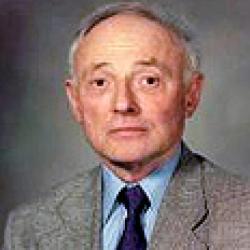
Frank Adams, an English mathematician, was a member of the Royal Society and one of the founders of homotopy theory. He was born on November 5, 1930, in Woolwich, a suburb in southeast London.
Early Education and Research
Adams developed an interest in research during his student years while studying under the guidance of Abram Besicovitch. However, he soon switched his focus to algebraic topology. In 1956, Adams obtained a PhD in Mathematics from the University of Cambridge. His dissertation, supervised by Shaun Wylie, was titled "On spectral sequences and self-obstruction invariants."
Academic Career
Adams served as the head of the Mathematics Department at the University of Manchester from 1964 to 1970. He then held the position of Professor of Astronomy and Geometry at the University of Cambridge from 1970 to 1989. In 1964, Adams was elected as a member of the Royal Society.
Contributions to Mathematics
During the 1950s, homotopy theory was in its early stages of development and faced unresolved problems. Adams made several significant theoretical achievements in the field of algebraic topology. Influenced by the French school of Henri Cartan and Jean-Pierre Serre, he reformulated and strengthened his methods of studying homotopy groups using spectral sequences. Today, the "Adams spectral sequence" is widely used for calculating stable homotopy groups. By applying the spectral sequence, Adams solved the Hopf invariant problem in 1960 and conducted a profound analysis of secondary cohomology operations, thereby resolving the problem of algebra with division. The Adams-Novikov spectral sequence allowed for the use of extraordinary cohomology theory instead of classical cohomology, leading to the construction of higher Hopf invariants.
Other Contributions
Adams was also a pioneer in the application of algebraic K-theory. He introduced "Adams operations" in K-theory, which are widely used in purely algebraic contexts. In 1974, he became the first recipient of the Senior Whitehead Prize from the London Mathematical Society. Many talented mathematicians who studied under Adams went on to have a significant impact on the development of algebraic topology in the UK and worldwide. His lectures at the University of Chicago were published in 1996 as part of the "Chicago Lectures in Mathematics Series," which included his lectures on exceptional Lie groups, stable homotopy, and generalized homology.
Honors and Legacy
The conference room in the Alan Turing Building at the University of Manchester, where major mathematical research takes place, is named after Frank Adams. In memory of his contributions to mathematics, a memorial plaque was installed in the chapel of Trinity College, Cambridge.