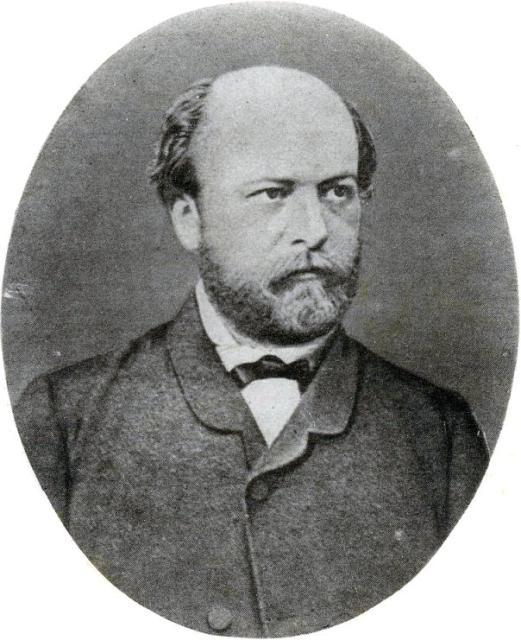
Friedrich Albert Lange
 Germany
- The Life and Legacy of Friedrich Albert Lange
- Teaching and Activism
- The Arbeiterfrage and Historical Materialism
- Exile and Intellectual Pursuits
- The Marburg School of Neo-Kantianism
- Lange's Philosophy
- Return to Kant and Critical Philosophy
- Influence and Legacy
The Life and Legacy of Friedrich Albert Lange
Early Years and EducationFriedrich Albert Lange was born in Duisburg, Germany, on March 10, 1828, to a pastor's family. He received his early education at the grammar schools in Duisburg and Zurich, where he developed a passion for philosophy and psychology.
In 1847, Lange graduated with degrees in philosophy and psychology from the University of Zurich. He then pursued further studies at the University of Bonn, completing his doctoral dissertation in 1851 and passing the state examination for the position of gymnasium teacher.
Teaching and Activism
After receiving his doctorate, Lange taught at a gymnasium in Cologne for four years. In 1855, he became a lecturer at the University of Bonn, offering courses in social statistics and critical history of materialism.
Lange's activism and protests against government pressure on the teaching profession led him to leave his position and become a journalist. He joined a committee for the congress of German workers' unions, where he advocated for reconciliation among different factions.
The Arbeiterfrage and Historical Materialism
In 1865, Lange published his influential book, "The Arbeiterfrage" (The Labor Question), in which he addressed the social question. This work was later expanded into a comprehensive treatise that sparked debates with opponents like Eugen Richter.
During the same period, Lange also published "Die Grundlegung der mathematischen Psychologie" (The Foundation of Mathematical Psychology) and his major work, "Geschichte des Materialismus" (History of Materialism).
Exile and Intellectual Pursuits
Following the war with Prussia, Lange moved to Switzerland. He continued to divide his time between philosophy and politics, publishing articles and contributing to the Winterthurer Landbote newspaper.
In 1870, Lange became a professor of inductive philosophy at the University of Zurich. He actively participated in the drafting of the city's radical-democratic constitution, which introduced the referendum.
The Marburg School of Neo-Kantianism
In 1872, Lange moved to Marburg, where he founded the Marburg School of Neo-Kantianism. This school emphasized critical inquiry and rejected metaphysics in favor of a focus on epistemology and the limitations of human knowledge. Hermann Cohen became Lange's student and successor.
Lange's Philosophy
History of MaterialismLange's "History of Materialism" became a significant work in European thought. He argued that materialism was the only valid method for the natural sciences, but rejected it as metaphysics based on Kantian criticism.
Return to Kant and Critical Philosophy
Lange advocated a return to Kant's critical philosophy, emphasizing its critique of knowledge and the limits of human understanding. He argued that metaphysics was only possible as poetry and not as science.
Influence and Legacy
Friedrich Albert Lange's influence on philosophy remains significant. His work on materialism and critical philosophy provided a foundation for the development of neo-Kantianism and the later logical positivism movement.
While Lange is sometimes compared to John Stuart Mill, his unique contributions as a critic and proponent of critical inquiry should not be overlooked. His work continues to shape philosophical discourse on the nature of knowledge, reality, and the human condition.




