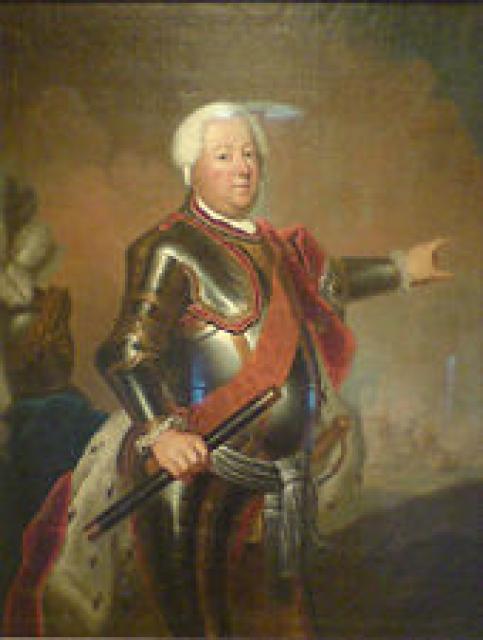
Friedrich Wilhelm
 Austria
- Early Life and Education
- Marriage and Military Career
- Accession to the Throne
- Fiscal Reforms and Economic Policies
- Legal and Administrative Reforms
- Family and Domestic Life
- Imprisonment and Redemption
- Legacy and Influence
Early Life and Education
Frederick William I was born on August 14, 1688, to Frederick III (later King Frederick I of Prussia) and Sophia Charlotte of Hanover. As the third son, Frederick's elder brothers had died in infancy. His childhood was marked by his robust health and lively, boisterous nature. Despite his mother's fondness, his relationship with his father was strained. Frederick's education was shaped by his disinterest in the humanities, his passion for mathematics and military affairs, and his rebellious nature.
Marriage and Military Career
In 1706, Frederick William married Sophia Dorothea of Hanover for political reasons. The following year, he fought in the War of the Spanish Succession under the command of the Duke of Marlborough. His battleshardened experience left a lasting impression on him.
Accession to the Throne
Upon his father's death in 1713, Frederick William I ascended to the Prussian throne. His reign was characterized by administrative reforms and a strict focus on military affairs. He promoted Leopold, Prince of Anhalt-Dessau, his close friend and ally in military matters.
Fiscal Reforms and Economic Policies
Frederick William's frugal policies extended to the royal court, where expenses were significantly reduced. He also established a commission to investigate financial mismanagement in Berlin, leading to criminal proceedings. Control and economy became the hallmarks of his governance.
Legal and Administrative Reforms
In 1713, Frederick William published "Amendments and Clarifications Regarding Justice," forming the basis for a comprehensive legal code in Prussia. It proclaimed the equality of all citizens before the law. He also restructured the administrative structures of major cities, centralizing authority and streamlining tax collection.
Family and Domestic Life
Frederick William was an authoritarian father, physically punishing his children. His domineering nature led his son, Frederick the Great, to attempt to flee Prussia in 1730. The failed attempt resulted in the execution of his friend, Hans Herman von Katte, and the public humiliation of his girlfriend.
Imprisonment and Redemption
Frederick's attempt to escape earned him a lengthy imprisonment in Küstrin Fortress. During this time, he changed his behavior, writing subservient letters to his father and conforming to his demands. His newfound submission eventually led to his release and a reconciliation with his father.
Legacy and Influence
Upon his death in 1740, Frederick William I left Prussia as a disciplined and militarized state. His reforms laid the foundation for the expansionist policies of his son, Frederick the Great. Despite his harsh methods, Frederick William's administrative reforms and military prowess had a lasting impact on Prussia, shaping its future as a formidable European power.