Gabor Vajna
 Hungary
- Early Life and Military Service
- Political Rise
- Interior Minister under the Arrow Cross
- Flight, Trial and Execution
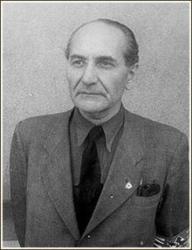
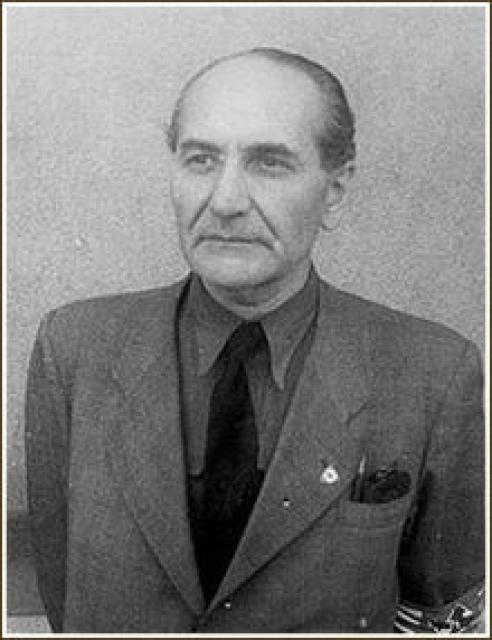
Gábor Vajna was a Hungarian military officer and politician who became interior minister in Ferenc Szálasi’s Arrow Cross government. He helped the far-right movement consolidate power after its October 1944 takeover and served during a period of escalating persecution, dispossession and murder of Hungarian Jews. After the war, a people’s tribunal convicted him of war crimes and sentenced him to death.
Early Life and Military Service
Vajna was born in 1891 in Kézdivásárhely, then in the Kingdom of Hungary and now known as Târgu Secuiesc in Romania. He pursued a military career and later held a counterintelligence post at the Fűzfő industrial complex. He left active military service in the 1920s and was formally retired by 1942.
Political Rise
Vajna joined the Arrow Cross movement in the late 1930s, as Hungary’s far-right politics grew increasingly radical and antisemitic. His political activity cost him his industrial post: in 1939 he was dismissed for Arrow Cross propaganda. That year he entered parliament as a party representative for Veszprém County. By 1942 he had become head of the party’s national control organization and a close associate of its leader, Ferenc Szálasi.
Interior Minister under the Arrow Cross
On October 15, 1944, the Arrow Cross seized power after Regent Miklós Horthy attempted to take Hungary out of the war. Szálasi became head of the new regime, and Vajna was appointed interior minister. He held the post until the government fled westward as Soviet forces advanced.
The Arrow Cross regime intensified the persecution of Jews in Hungary, particularly in Budapest. Vajna’s ministry was part of the state apparatus that implemented anti-Jewish measures. On taking office, he publicly warned that the government would impose measures against Jews “to which they might prefer death,” and said that outsiders must not interfere. Under the regime, Jews were dispossessed, forced into labor and subjected to deportation and murder. Arrow Cross gunmen carried out killings in Budapest, including along the Danube, while thousands of people were driven toward the Austrian border in death marches.
Vajna also served as the party’s commissioner in the prime minister’s office and, in January 1945, as the party’s commissioner for Budapest’s defense. His role was not simply that of a cabinet official: he was a senior party leader during the regime’s final months, helping it maintain authority while the capital was under siege.
Flight, Trial and Execution
On March 31, 1945, Vajna fled to Austria. He was captured by American forces and transferred to Budapest later that year to face a people’s tribunal. The court found him responsible for helping the Arrow Cross movement seize and retain power, and for contributing to the severe abuse, plunder and unlawful executions of persecuted people. He was sentenced to death on March 1, 1946.
Vajna was executed in Budapest on March 12, 1946. His career stands as an example of how Hungary’s wartime institutions were placed in the service of a fascist movement, and how senior government officials participated in persecution and violence.