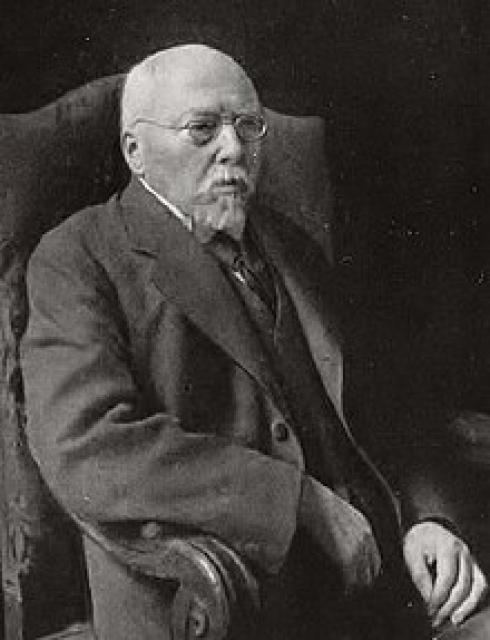
Georg von Hertling
 Germany
- Georg von Hertling: A Life of Philosophy and Politics
- Academic Career
- Political Engagement
- Premier of Bavaria
- Reich Chancellor
- Later Years
- Legacy
Georg von Hertling: A Life of Philosophy and Politics
Early Life and EducationGeorg von Hertling was born in 1843 as the great-nephew of the esteemed writer Bettina von Arnim and the poet Clemens Brentano. His early years were marked by a solid foundation in philosophy and politics.
Academic Career
Hertling embarked on an illustrious academic career, eventually becoming a professor of philosophy at the renowned Ludwig Maximilian University of Munich. His keen intellect and profound understanding of philosophy gained him recognition within scholarly circles.
Political Engagement
In addition to his academic pursuits, Hertling played an active role in German politics. He held the position of député in the Reichstag from 1875 to 1890 and again from 1896 to 1912. As a member of the Catholic Centre Party, he led the party's faction in the Reichstag from 1909 to 1912.
Premier of Bavaria
Hertling's political career reached a pinnacle when he was appointed Premier of Bavaria in 1912. During his five years in this role, he guided the state through challenging times, including the outbreak of World War I.
Reich Chancellor
In 1917, Hertling was chosen to serve as Reich Chancellor. His tenure was marked by significant political developments, including the signing of the Treaty of Brest-Litovsk with Russia. This treaty ended hostilities between Germany and the newly formed Soviet Union.
Later Years
After stepping down as Reich Chancellor in 1918, Hertling retreated from active politics. He spent his remaining years in contemplation and scholarly pursuits, passing away in 1919.
Legacy
Georg von Hertling remains an influential figure in German history. His contributions to philosophy, politics, and his pivotal role in the negotiations of the Treaty of Brest-Litovsk have left an enduring legacy. His life and work continue to be studied and admired as a testament to the enduring power of intellect and the importance of reasoned dialogue in shaping the course of nations.