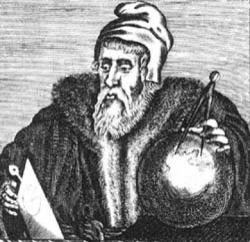
George Boole
 Great Britain
Biography of George Boole
George Boole was an English mathematician who made significant contributions to the field of logic and algebra. Born into a working-class family, he received his first lessons in mathematics from his father. Although he attended a local school, he can be considered mostly self-taught. By the age of 12, he was fluent in Latin and later mastered Greek, French, German, and Italian.
At the age of 16, Boole began teaching at a village school, and by the time he turned 20, he had opened his own school in Lincoln. In his rare leisure hours, he immersed himself in mathematical journals from the Mechanical Institute and showed interest in the works of past mathematicians such as Newton, Laplace, and Lagrange, as well as contemporary algebraic problems.
Starting from 1839, Boole began submitting his works to the newly established Cambridge Mathematical Journal. His first work, "Investigations into the Theory of Analytical Transformations," dealt with differential equations, algebraic problems of linear transformation, and the concept of invariance. In his 1844 research, published in the "Philosophical Transactions of the Royal Society," he addressed the problem of the interaction between algebra and calculus.
In the same year, Boole was awarded the medal of the Royal Society for his contributions to mathematical analysis. Shortly after realizing that his algebra could be applied to logic, in 1847, he published a pamphlet titled "The Mathematical Analysis of Logic," in which he suggested the idea that logic is closer to mathematics than philosophy. This work was highly acclaimed by the English mathematician Augustus De Morgan.
Thanks to this publication, Boole was appointed as a professor of mathematics at Queen's College, Cork in 1849, despite not having a university education. In 1854, he published his work "An Investigation of the Laws of Thought, on Which Are Founded the Mathematical Theories of Logic and Probabilities." The works of 1847 and 1854 laid the foundation for algebra of logic, or Boolean algebra.
Boole was the first to demonstrate the analogy between algebraic and logical operations, as both involve only two possible outcomes: true or false, zero or one. He devised a system of notation and rules that allowed any statement to be encoded and manipulated as ordinary numbers. Boolean algebra involved three fundamental operations: AND, OR, and NOT, which enabled the addition, subtraction, multiplication, division, and comparison of symbols and numbers. In this way, Boole was able to describe the binary number system in detail.
In his work "The Laws of Thought" (1854), Boole finally formulated the foundations of mathematical logic. He also attempted to formulate a general method of probabilities, through which the probability of a subsequent event logically related to a given system of possible events could be determined. In 1857, Boole was elected a Fellow of the Royal Society in London.
His works "A Treatise on Differential Equations" (1859) and "A Treatise on the Calculus of Finite Differences" (1860) had a tremendous influence on the development of mathematics, reflecting some of Boole's most important discoveries.
Today, Boole's ideas are used in all modern digital devices, making him a pioneer in the field of computer science and a prominent figure in the history of mathematics.