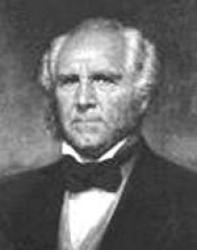
George Bush
 USA
USA- George H. W. Bush: The 41st President of the United States
- Early Life and Career
- Presidency (1989-1993)
- Foreign Policy Successes
- Domestic Policy Challenges
- Political Ideology and Legacy
George H. W. Bush: The 41st President of the United States
George Herbert Walker Bush, the 41st President of the United States, served from 1989 to 1993. A Republican, he was the son of former Senator Prescott Bush and the father of former President George W. Bush.

Early Life and Career
Born in Milton, Massachusetts, on June 12, 1924, Bush attended the elite Phillips Academy in Andover. He served as a naval aviator during World War II and graduated from Yale University in 1948. After moving to Texas, he became involved in the oil industry.
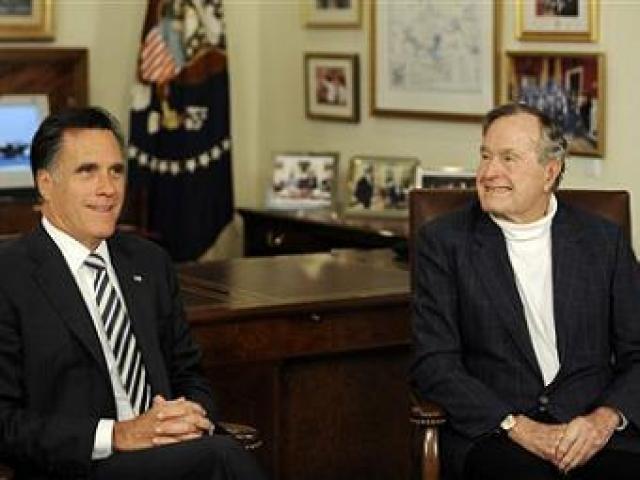
Bush began his political career in the 1960s, holding various positions including Republican Party Chairman in Houston and U.S. Representative to the United Nations. In 1976, he became Director of Central Intelligence under President Gerald Ford. He unsuccessfully sought the Republican presidential nomination in 1980 but was elected Vice President under President Ronald Reagan.
Presidency (1989-1993)
Bush's presidency was marked by his commitment to diplomacy and international affairs. He oversaw the end of the Cold War, the reunification of Germany, and the Gulf War. Domestically, he struggled to address the growing federal budget deficit and increasing economic inequality.
Foreign Policy Successes
Bush's foreign policy achievements included the invasion of Panama to arrest dictator Manuel Noriega, the facilitation of German reunification, and the resolution of the Latin American debt crisis. His most significant foreign policy action was Operation Desert Storm, in which a U.S.-led coalition expelled Iraqi forces from Kuwait.
Domestic Policy Challenges
Despite his focus on foreign policy, Bush faced significant domestic challenges. He raised taxes to reduce the federal deficit, which angered many voters. His economic policies failed to stimulate growth, and he was unable to significantly address issues such as healthcare and education.
Political Ideology and Legacy
Bush was a moderate conservative who prioritized pragmatism and consensus-building. He was known for his diplomatic skills and ability to work with both Republicans and Democrats. His presidency is often seen as a transitional period between the conservative Reagan era and the Clinton era.
Bush lost the 1992 presidential election to Bill Clinton. He left office with low approval ratings, but his legacy has improved over time. He is remembered as a skilled diplomat and a transitional president who helped navigate the United States through a period of significant global change.