George Manby
 Great Britain
- Early Life and Education
- Military and Literary Career
- Napoleonic Invasions and Coastal Defense
- The Manby Mortar
- Fire Safety and Arctic Explorations
- Advocacy for Lifeboat Services
- Obsession with Horatio Nelson
Early Life and Education
George William Manby, an English writer and inventor, was born on November 28, 1765, in Denver, Norfolk. Despite claims of his close friendship with Horatio Nelson at school, historical evidence suggests this is unlikely, as Nelson was significantly older and had already departed before Manby's enrollment.

Military and Literary Career
At age 17, Manby volunteered for service in the American Revolutionary War but was rejected due to his age and stature. Instead, he joined the Royal Military Academy at Woolwich and later the Cambridgeshire Militia, rising to the rank of Captain. Manby also pursued literary interests, publishing several books, including histories and travel guides, while residing in Clifton, Bristol.
Napoleonic Invasions and Coastal Defense
In 1803, Manby's pamphlet on the threat of a Napoleonic invasion in England caught the attention of War Secretary Charles Yorke. Impressed by its insights, Yorke appointed Manby as military commandant of barracks in Great Yarmouth. In February 1807, he witnessed the tragic sinking of the naval vessel "Snipe" near the coast, sparking his determination to develop a life-saving apparatus.
The Manby Mortar
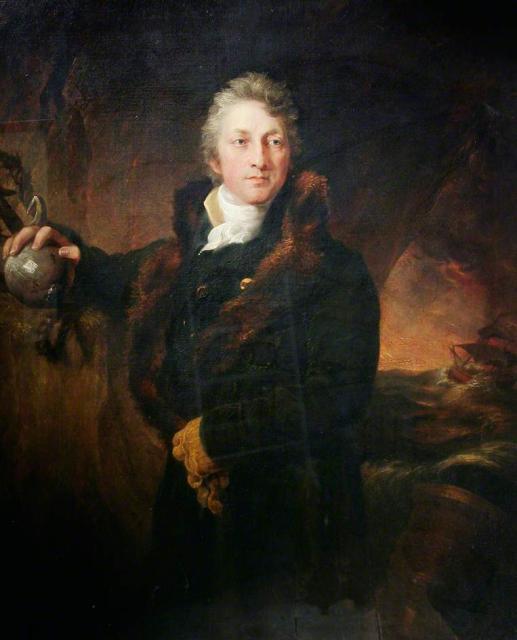
Manby's innovative design, known as the Manby Mortar, was a lifesaver. Using a mortar to launch a line and breeches buoy from shore to a distressed vessel, it was first officially adopted in 1814. By the time of Manby's death, his invention had rescued over a thousand lives.
Fire Safety and Arctic Explorations
In 1813, Manby invented the "Extincteur," the first portable pressurized fire extinguisher. He also devised a device for rescuing people from icy waters. In 1821, he embarked on an expedition to Greenland to test a new type of harpoon for whaling, but his efforts were met with resistance. Manby's account of his Greenland voyage, titled "Journal of a Voyage to Greenland," provided valuable observations on Arctic flora, fauna, and whaling practices.
Advocacy for Lifeboat Services
Manby advocated for the establishment of a national firefighting service and is believed to have laid the foundation for the Royal National Lifeboat Institution, which continues to save lives around the UK coastline.
Obsession with Horatio Nelson
In his later years, Manby became fixated on Horatio Nelson, transforming his home into a Nelson museum. He passed away on November 18, 1854, in Great Yarmouth, at the grand old age of 89.