George Washington
 USA
USA- Biography of George Washington
- Early Life and Education
- Military Career and the Revolutionary War
- Political Philosophy and the Revolutionary Era
- The Revolutionary War and Leadership
- Presidency and Legacy
- Presidency and Leadership Style
Biography of George Washington
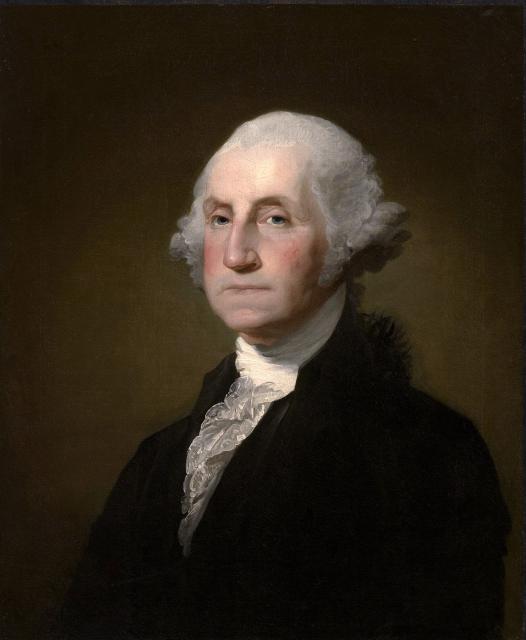
George Washington, the first President of the United States, played a pivotal role in shaping American history. He was deeply involved in all the endeavors that led the thirteen colonies to become a union of sovereign republics and then the first modern federal state. In Virginia and the Continental Congress, he was among those who staunchly opposed English colonial policies. As the Commander-in-Chief of the American forces, he organized and led the military resistance that eventually led to independence after eight years of war. A firm believer in the necessity of a strong central government, he participated in the development and adoption of the new constitution in 1787-88 and, as President, laid the foundations for a republican federal state where Americans could find their national consensus.
Early Life and Education
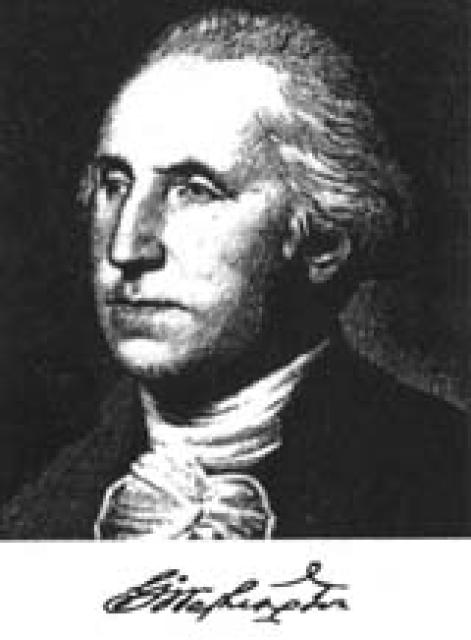
George Washington was born on February 22, 1732, into a family that had been living in Virginia for four generations. His rise to the colonial elite was by no means predetermined, as he spent his childhood and youth in humble conditions, received a superficial education, and lost his father Augustine, a tobacco plantation owner and surveyor, at the age of eleven. He was raised by his stepbrother Lawrence, and after Lawrence's death in 1752, he inherited the Mount Vernon estate near Alexandria on the Potomac River. Initially, Washington's lack of formal education and cultivated manners led to internal insecurity, but he gradually developed a confident demeanor. He found a influential mentor in his neighbor Lord Fairfax, one of Virginia's wealthiest landowners. Fairfax introduced him to the lifestyle of the untitled gentry and supported his early steps towards a career as a public land surveyor and officer. His work as a land surveyor ignited Washington's interest in the western territories. Throughout his life, he sought to acquire land in the West and increase his holdings.
Military Career and the Revolutionary War
Washington seemed destined for a military career, as his extraordinary height and physical strength emphasized his natural authority. As a colonel in the Virginia militia, he was involved in the first battles of the French and Indian War in the area of present-day Pittsburgh in 1754-55. Although these were more skirmishes with disastrous outcomes, they earned him a reputation as a military leader. The fact that he had to yield to British officers of the regular army and that his militia was only used to defend the borders engendered a hidden animosity towards the British empire that he could never overcome. Immediately after leaving military service, Washington married Martha Dandridge Custis, a widow and mother of two children, in January 1759. This marriage elevated Washington to the planter aristocracy of the colony. Mount Vernon became one of the unofficial centers of this elitist class, which combined a high sense of service to the common good with leisurely pursuits such as hunting, horse riding, dancing, and card games. Nevertheless, Washington devoted himself intensively to farming and experimented with new methods of cultivation and animal husbandry. He divided his land into several plantations, gradually replacing tobacco with wheat and striving for self-sufficiency. Although he had no children of his own, he took on the role of a father figure in raising Martha's son and daughter from her first marriage.
Political Philosophy and the Revolutionary Era
Washington's worldview and political philosophy were influenced by English opposition or agrarian literature of the early 18th century, particularly Viscount Bolingbroke, who juxtaposed the corrupt and decadent activities of the court and government with the ideal of a patriotic king. He was also attracted to the figure of Cato the Younger, whom he learned about through Joseph Addison's play and whom he considered the embodiment of all Roman virtues. He tried to live up to these ideals in his public and personal life, even adopting a classical style of speech and dignified gestures. Self-control, strict emotional control, and disciplined behavior became his outstanding qualities, overshadowing his initial spontaneity. By temperament, he was conservative and prudent, moderately religious without deep interest in theological questions, but always ready to embrace new ideas and thoughts, combining the virtues of the Anglican past with a progressive Enlightenment consciousness. Washington fully understood the English imperial policy after 1763 as an attack on the "ancient rights" of settlers, which, if not resolutely resisted, would lead to the complete elimination of colonial self-government. He believed that the elite, supposedly the only one capable of rising above private, material interests for the common good, should take the lead in this struggle. Based on this principled standpoint, Washington categorically rejected British tax laws and claims to sovereignty. In the Virginia House of Burgesses and the first Continental Congress in Philadelphia, where he appeared in September 1774, he was one of the first to advocate armed resistance against England.
The Revolutionary War and Leadership
After the battles of Lexington and Concord in April 1775, Washington was unanimously chosen by the Second Continental Congress as the Commander-in-Chief of all American armed forces. This decision not only reflected their trust in his military leadership qualities but also their intention to mobilize support from the southern colonies for the threatened New England colonies. On July 3, 1775, Washington assumed command of the troops surrounding the British-occupied Boston in Cambridge, Massachusetts. In March 1776, he successfully liberated the city, but according to the Declaration of Independence on July 4, 1776, the thirteen American states had to endure a series of setbacks. Until 1778, when the alliance with France decisively strengthened the position of the rebels, Washington's main achievement was holding his troops together and avoiding a crushing defeat in the struggle against the better-trained and professionally led British army. Through tactics of patience, guerrilla warfare, and unexpected attacks, he compensated for initial mistakes and gradually regained the initiative. He earned the respect and love of his subordinates through strict discipline and unwavering dedication to the interests of officers and soldiers. He became a symbol of stability in the resistance because even in the harshest conditions, such as the winter camp at Valley Forge in 1777-78, he instilled confidence in victory. Throughout the war, Washington's biggest challenge was the arming and supply of the army. He often felt abandoned by the Congress of the Confederation, established in 1777 on the basis of the Articles of Confederation, and the governments of individual states. Despite these disappointments and intrigues against him in Congress, Washington never challenged the primacy of civilian leadership. He left all political questions to Congress and made important military decisions only after detailed discussions with trusted individuals, primarily Alexander Hamilton from New York and the French Marquis de Lafayette. His conviction that victory in a conventional battle, rather than guerrilla tactics, would force the British to surrender was finally confirmed in Yorktown, Virginia. Through well-coordinated action with the French army and navy, he achieved the surrender of General Cornwallis and his 7,000 British soldiers on October 19, 1781. This opened the way for negotiations that, two years later, led to the formal conclusion of peace and international recognition of American independence.
Presidency and Legacy
After Yorktown, there was a secret desire among officers, who feared that the indecisive Congress might withhold their salaries for their service, to make Washington a dictator or king. In March 1783, Washington restored discipline and once again demonstrated the principle of military subordination to political leadership by directly addressing the officer corps. Before ceremoniously returning his command to Congress on December 23, 1783, he sent a circular letter to the governments of individual states, which summarized his wartime experience and political legacy. In this circular letter, he advocated strengthening the powers and authority of the central government; otherwise, the union would soon fall apart. This "national vision" did not find mutual love from the radical republicans who advocated a looser confederation of sovereign states. They were also shocked that Washington was elected president of the Society of the Cincinnati, an officer fraternity reminiscent of European aristocratic societies. From Mount Vernon, where he was hospitably received at any time, Washington observed with growing concern the political events that seemed to confirm his fears about the collapse of the "republican experiment." When farmers in western Massachusetts revolted against the Boston government in the fall of 1786 under the leadership of Daniel Shays, he predicted a slide into chaos and called on his numerous correspondents to vigorously counteract it. Influenced by Shays' Rebellion, he could not refuse the demand to preside over the Constitutional Convention in the spring of 1787, which was to address the shortcomings of the Articles of Confederation. He hesitated for a while, unsure whether to put his reputation at stake for an undertaking with an uncertain outcome, but ultimately decided to return from retirement and lead the negotiations in Philadelphia from May to September 1787, resulting in a completely new constitution. Although he rarely spoke in the convention, Washington had no doubt that he was on the side of the "nationalists," led by Alexander Hamilton and James Madison, who sought to strengthen central government at the expense of state sovereignty. Like Hamilton, he admired the principle of a "mixed" constitution based on the English model, which ensured the energetic pursuit of national interests. Therefore, he had some reservations about the convention's majority preference for a rather strict separation of powers between the union and individual states and among the three branches of the federal government. Nevertheless, he believed that the results of the discussions were the best under the circumstances. After the draft was signed, he actively campaigned during the months-long ratification debates for the acceptance of the Constitution. The Federalists, as the ratification supporters called themselves, skillfully used Washington's high authority to obtain popular approval, which was by no means guaranteed. In the celebrations dedicated to the Constitution in 1788, Washington was symbolically portrayed as the helmsman of the new "ship of state," equivalent to widespread public approval of his presidency.
Presidency and Leadership Style
Washington did not participate in the pre-election campaign but awaited the call of his fellow countrymen from Mount Vernon. The members of the Electoral College, chosen in the states in early January 1789, unanimously voted for Washington as President on February 4, with John Adams, a New Englander, receiving the second-highest number of votes and being elected Vice President. Washington hesitated again because he was well aware of the weight of the task and feared that his acceptance might be interpreted as evidence of excessive ambition. In the end, he agreed, noting that the vote of confidence from the people left him "practically no alternative." Washington's journey from Mount Vernon to the Congress residence in New York resembled a triumphal procession, demonstrating that the population trusted him as a person more than the untested constitution. On April 30, 1789, the first President of the United States was inaugurated in Manhattan with great ceremony. In his short inaugural address, Washington touched on an important theme for the religious and political self-awareness of Americans, openly stating that the "invisible hand of the Almighty" guided the destiny of the United States; the future of the republican government system fundamentally depends on the results of the experiment "entrusted to the hands of the American people." Washington's ultimate goal was to ensure the survival of self-government in a world permeated by absolutism and despotism by filling the letters of the constitution with life and establishing from the very beginning a new government system based on "true principles." To achieve this goal, he wanted to fully utilize the constitutional powers granted to the office of the President. He understood that as the first to hold this position, he could give clear contours to the somewhat blurry picture of the presidency, and his decisions would establish scales and set precedents. The beginning was marked by the distribution of administrative positions, taking into account the interests of individual regions while trying to link different political and ideological orientations. Following the example of his military council, he surrounded himself with brilliant intellectual collaborators who were expected to be not only mere executive agents but also advisors and supporters, leading to the creation of an unofficial cabinet that was not foreseen by the Constitution. He ensured that the ministers and officials were accountable only to him and that their dismissal did not require the consent of the Senate in a different manner than their appointment. He wanted to realize his vision of a united and cohesive federal government, which he understood as the defender of the common good of the union, in close cooperation with Congress. In this regard, it worked to his advantage that the Federalists, whom Washington considered friends of the government, won the majority in the House of Representatives and the Senate in the first federal elections of 1788-89, and that James Madison became a trusted Speaker of the House. He used his veto power very sparingly because he believed he could reject laws because he considered them inconsistent with the Constitution, not because he disliked their content. Washington personally delivered his annual address to Congress, a practice that was abolished in the 19th century and only revived during President Woodrow Wilson's term. His vision of a cooperative and unanimous government guided his actions throughout his presidency.


