Georges-Eugène Haussmann
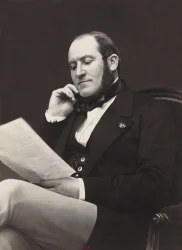
Georges-Eugène Haussmann (1809–1891), widely known as Baron Haussmann, was the French official who directed the sweeping reconstruction of Paris under Emperor Napoleon III. His projects reshaped the capital with broad avenues, parks, improved water and sewer systems, and new public spaces. The city’s distinctive nineteenth-century streetscape remains inseparable from his name, though the scale and cost of the transformation were fiercely debated in his own time.
Early Life and Public Service
Haussmann was born in Paris on March 27, 1809, into a Protestant family with Alsatian roots. He studied law while also pursuing music, then entered the civil service. He rose through a succession of administrative posts, serving as a subprefect and later as prefect in several departments, including Gironde.
In June 1853, Napoleon III appointed him prefect of the Seine, the department that included Paris. The emperor wanted a more modern and impressive capital, and Haussmann proved a determined administrator capable of carrying out large plans. He held the post until 1870.
Transforming Paris
Haussmann coordinated an extensive programme of public works between 1853 and 1870. New avenues cut through dense districts, connecting railway stations and major public buildings while improving circulation. The work also included parks and gardens, expanded water supplies, modernized sewers, street lighting and new bridges. Paris annexed surrounding communes in 1860, broadening the city and the scale of its urban planning.
The rebuilding was not Haussmann’s work alone: Napoleon III set the political direction, while engineers, architects and other officials designed and executed many projects. Haussmann’s contribution was to marshal the administration, financing and construction into an ambitious, coordinated programme. Its lasting effect can be seen in the boulevards and apartment blocks that still define much of central Paris.
Controversy and Later Career
The transformation came at a high financial and social cost. Expropriations and demolitions displaced residents and businesses, and the financing methods and mounting public debt drew sharp criticism. Journalist and politician Jules Ferry made the spending a national controversy in his 1867 pamphlet The Financial Accounts of Haussmann. Supporters defended the improvements as necessary for sanitation, transport and the city’s growth; critics challenged the opaque finances and the upheaval imposed on existing neighborhoods.
Haussmann was dismissed in January 1870 as the government changed course. He later returned to politics as a Bonapartist deputy for Corsica from 1877 to 1881 and published his memoirs. He died in Paris on January 11, 1891.
Legacy
Haussmann’s reputation remains complex. His programme helped make Paris more accessible and supplied infrastructure for a rapidly growing modern city, while its broad avenues and monumental scale became models for urban planners elsewhere. The same transformation also erased older neighborhoods, disrupted established communities and left a heavy financial burden. Both the beauty and the costs of modern Paris are part of his legacy.