Phocas
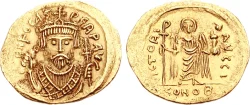
Phocas was Byzantine emperor from 602 to 610, after rising from the ranks of the army during a revolt against Emperor Maurice. His seizure of power triggered a series of crises: unrest within the empire, war with Persia, and ultimately a rebellion that brought Heraclius to the throne. The surviving accounts of Phocas are often hostile, so historians distinguish what can be established from later portrayals of his character.
From Soldier to Emperor
Phocas was a centurion in the Byzantine army serving on the Danube frontier. In 602, soldiers mutinied after Maurice ordered them to winter north of the Danube. The revolt spread, and the troops chose Phocas as their leader. He marched on Constantinople, where Maurice was deposed and killed. Phocas was proclaimed emperor, beginning a reign that lasted eight years.
War and Opposition
The overthrow of Maurice had major consequences abroad. The Sasanian Persian king Khosrow II, who had been aided by Maurice in an earlier struggle, used his death as a reason to resume war against Byzantium. Persian forces advanced into imperial territory, while Phocas faced continuing unrest and challenges to his authority. The empire’s ability to respond was weakened by internal conflict.
Phocas also had a difficult relationship with the Roman Senate and population of Constantinople. Ancient chroniclers depict his rule as violent and arbitrary, although some of the most vivid accusations come from authors writing under the dynasty that replaced him. His government maintained the empire’s institutions, but military crises and political resistance steadily eroded his position.
Overthrow and Death
In 608, the exarch of Carthage, Heraclius the Elder, rebelled against Phocas. His son, also named Heraclius, led a fleet toward Constantinople in 610. Phocas’s support collapsed, and he was captured and executed after Heraclius entered the capital. The new emperor’s reign opened a different chapter in Byzantine history, as he inherited both the Persian war and a state weakened by years of upheaval.
Historical Reputation
Phocas is commonly remembered as a usurper whose accession helped precipitate a disastrous imperial crisis. Yet the causes of that crisis extended beyond one ruler: the army’s revolt, long-running frontier pressures, and the Persian response to Maurice’s death all shaped the outcome. Phocas’s short career remains a reminder of how quickly military discontent could transform into imperial power—and how difficult that power was to hold.