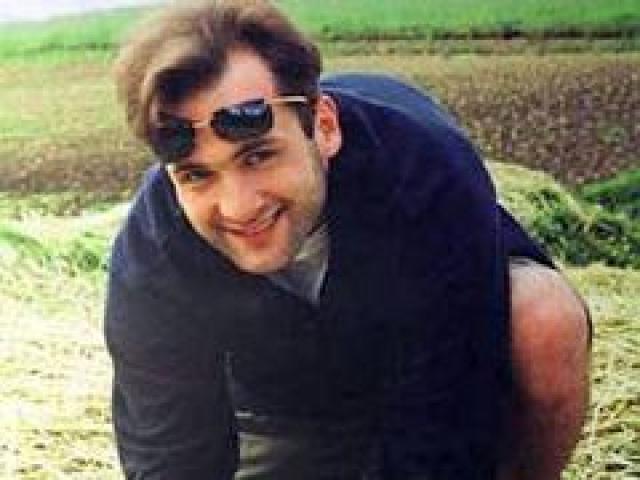
Georgiy Gongadze
 Ukraine
- Early Life and Education
- Early Career in Journalism
- Independent Journalism and "Ukrainska Pravda"
- Disappearance and Murder
- Political Fallout and Investigation
- Trial and Convictions
- Aftermath and Legacy
Early Life and Education
Born in Tbilisi, Georgia in 1969, Heorhiy Gongadze completed his high school education and enrolled in the evening program of the Tbilisi State University's Romance-Germanic Philology department. However, he was soon drafted into the military and served in either Tajikistan, Afghanistan, or along the Afghan-Tajikistan border. Upon his discharge, he resumed his studies and graduated from the Philology department of Ivan Franko National University of Lviv in Ukraine.
Early Career in Journalism
While still a student, Gongadze began his journalism career with the press service of the People's Movement of Ukraine party. In the early 1990s, he worked as a freelance correspondent for the Lviv newspaper "Post-Postup," hosted the program "Monitor" on Lviv television, and became the chief director of the "Center of Europe" creative association.
Independent Journalism and "Ukrainska Pravda"
In the mid-1990s, Gongadze produced several documentaries, including one on the Georgian-Abkhazian conflict. In 2000, he founded the independent online media outlet "Ukrainska Pravda" (Ukrainian Truth), which published investigative reports on corruption in the highest echelons of Ukrainian government.
Disappearance and Murder
On September 16, 2000, Gongadze disappeared. He had left the apartment of his editor, Alena Prytula, in Kyiv and was driving home when he was last seen. His dismembered body was found in a forest outside Kyiv on November 2, 2000.
Political Fallout and Investigation
The murder of Gongadze sparked a major political scandal, as it was linked to top Ukrainian officials. Audio recordings allegedly implicating President Leonid Kuchma and others in the plot were released by a former security officer. The case became a test of the country's commitment to media freedom and the rule of law.
Trial and Convictions
In 2005, the murder case was declared solved, and three high-ranking police officers were convicted of carrying out the crime. However, the mastermind behind the plot remained unidentified. The trial process continued for several years, with closed proceedings concluding in 2006 and open hearings beginning in July 2006.
Aftermath and Legacy
The investigation into Gongadze's murder was reopened in 2007, but the perpetrators of the original investigation were dismissed and the case was assigned to a new investigator. In 2008, the three convicted perpetrators were sentenced to prison terms. Gongadze's death and the subsequent investigation became a major turning point in Ukrainian history, exposing political corruption and prompting demands for greater transparency and accountability.