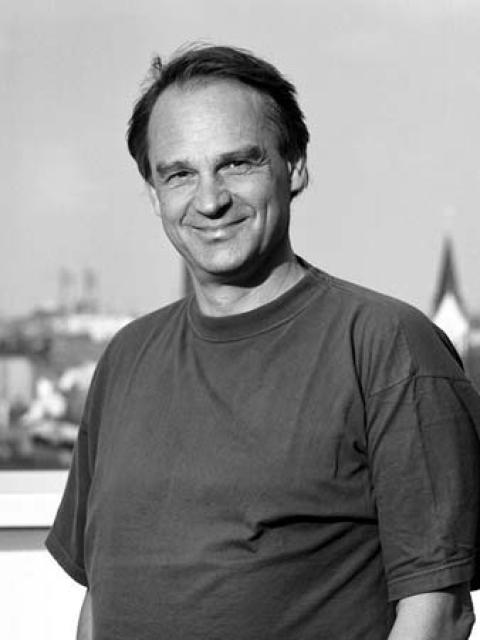
Gerd Binnig
 Germany
- Gerd Karl Binnig: A Revolutionary Mind in Physics
- Overcoming Challenges in STM Development:
- Honors and Recognition:
- Later Career and Legacy:
- Personal Life and Interests:
Gerd Karl Binnig: A Revolutionary Mind in Physics
Early Life and Education:Gerd Karl Binnig was born in Frankfurt am Main, Germany, on July 20, 1947, to Karl Franz Binnig, a factory engineer, and Ruth (née Bracke) Binnig, a draftswoman. After completing his secondary education at the Rudolf Koch Schule, he pursued a doctorate in physics at the University of Frankfurt, graduating in 1978 with a dissertation on superconductivity.
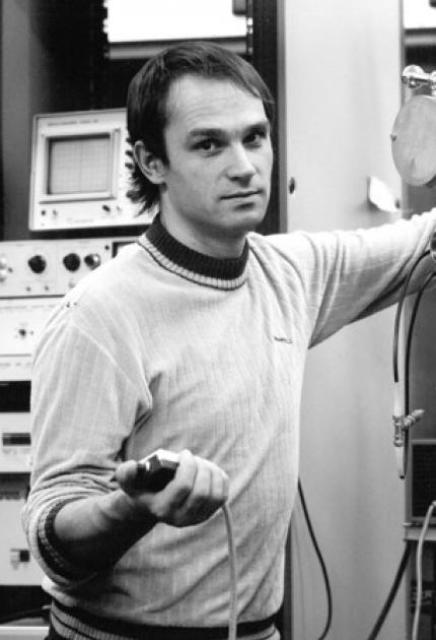
Scientific Breakthrough: Inventing the Scanning Tunneling Microscope (STM)

Immediately following his graduation, Binnig joined IBM Research Laboratory in Zurich, Switzerland, as a research scientist. There, he collaborated with Heinrich Rohrer to investigate materials surfaces. Motivated by the limitations of existing surface analysis techniques, they sought an alternative approach.
Inspired by quantum tunneling, a consequence of Heisenberg's uncertainty principle, Binnig and Rohrer devised a novel method for probing surfaces. By allowing electrons to tunnel through a vacuum gap between a sharp needle tip and the sample, they created a current that varied exponentially with the distance between them. Scanning the tip across the sample allowed them to map the surface at an atomic scale.
Overcoming Challenges in STM Development:
The development of the STM posed significant challenges, particularly in eliminating vibrational noise. The vertical position of the scanning tip had to be controlled with atomic-scale precision, as the tunneling current was highly sensitive to the tip-sample distance.
To address these issues, Binnig and Rohrer employed a combination of techniques. The microscope was suspended using superconducting lead and isolated from building vibrations with air-filled tires. Precise tip movement was achieved through piezoelectric materials that expand or contract when subjected to an electric field.
Honors and Recognition:
In 1986, Binnig and Rohrer shared half of the Nobel Prize in Physics "for their design of the scanning tunneling microscope." The other half was awarded to Ernst Ruska for his work on the electron microscope.
The Nobel committee recognized the revolutionary potential of the STM, stating that it "promises very much and that we have so far only witnessed the early stages of its development."
Later Career and Legacy:
Beyond the STM, Binnig continued his groundbreaking research in atomic and nanoscale physics. He made significant contributions to the understanding of surface phenomena, including quantum effects and molecular interactions at the atomic level.
Throughout his career, Binnig has received numerous prestigious awards, including the Hewlett-Packard Prize from the European Physical Society and the King Faisal International Prize in Science. He is a member of the IBM Academy of Science, a distinguished scientific advisory board.
Personal Life and Interests:
Outside of science, Binnig is an avid musician who composes, plays the violin and guitar, and sings. He is also a sports enthusiast, enjoying activities such as skiing, football, tennis, golf, and sailing. In 1969, he married Lore Wagner, a psychologist, and they have a daughter and a son.




