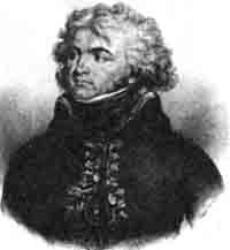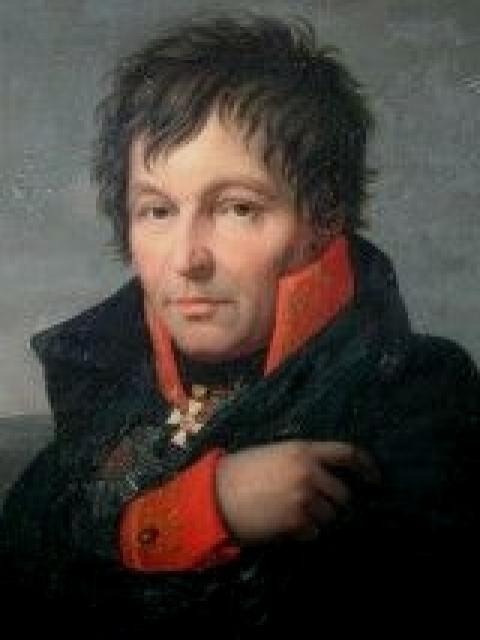
Gerhard Sharnhorst
 Germany
Biography of Gerhard Scharnhorst
Early Life and Military CareerGerhard Scharnhorst was a Prussian general and military reformer. He began his military service under Count Wilhelm Schaumburg-Lippe, where he trained in his military school and commanded a horse battery. In 1780-1790, he published numerous articles on military subjects and started a journal for soldiers. During the revolutionary wars, Scharnhorst served in the artillery in the Netherlands and commanded a cavalry battery. In 1794, he distinguished himself by saving his unit from a siege in Menin, Flanders.
Reforms and Leadership
In 1801, Scharnhorst joined the Prussian army and became a professor of military science. During the war of 1806-1807, he served as the chief of staff to the commander-in-chief and participated in the battles of Auerstedt and Preussisch Eylau. It was during this time that he became aware of the shortcomings of the Prussian army and the need for radical reforms. After the Treaty of Tilsit, Scharnhorst became the chairman of a commission tasked with transforming the army.
Military Reforms
Scharnhorst advocated for greater freedom and respect for the people, believing that the army should be an armed citizenry. He introduced universal conscription and aimed to establish a reserve force and a local militia. However, due to French pressure and limitations on troop numbers imposed on Prussia, immediate implementation of these reforms was not possible. Scharnhorst's reforms were mainly focused on changing the recruitment process, officer training, and improving the relationship between the army and the people.
Later Years and Death
In 1809 and 1810, Scharnhorst served as the Minister of War but had to resign due to suspicions from Napoleon. Unofficially, he continued to lead the Prussian army. In 1811, he traveled to St. Petersburg and Vienna to negotiate alliances against France, but the timing was not right. After the defeat of Napoleon's Grande Armée, Scharnhorst joined the committee for strengthening the Prussian army and once again became the chief of staff.
During the Battle of Lützen on May 2, 1813, Scharnhorst was wounded by a cannonball. Despite the unhealed wound, he traveled to Vienna to advocate for Austria's participation in the coalition against France. Unfortunately, his wound worsened, and on June 28 of the same year, Scharnhorst passed away.
Legacy
Gerhard Scharnhorst is remembered not only as a military reformer but also as a military theorist. In East Germany, the Scharnhorst Order (Scharnhorst-Orden) was established in his honor.