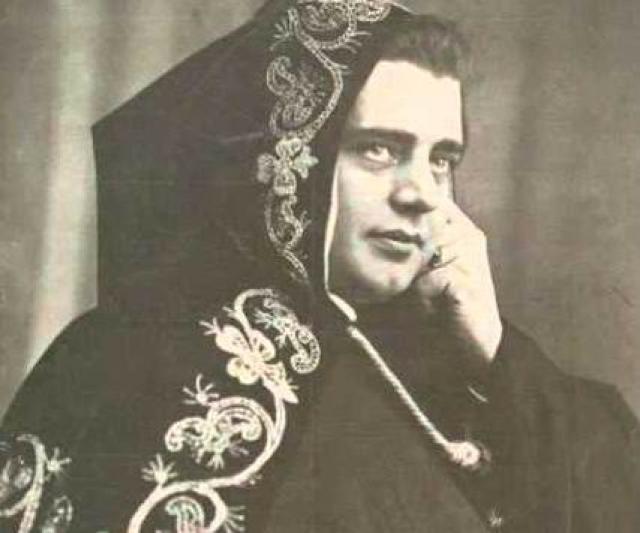
Giuseppe Anselmi
 Italy
Italy- Biography of Giuseppe Anselmi
- Early Life and Education
- Career Beginnings
- Rise to Fame
- International Success
- Later Years and Legacy
Biography of Giuseppe Anselmi
Giuseppe Anselmi was an Italian opera tenor, particularly successful in performing lyrical roles, whose European career reached its peak during the first decade of the 20th century.
Early Life and Education
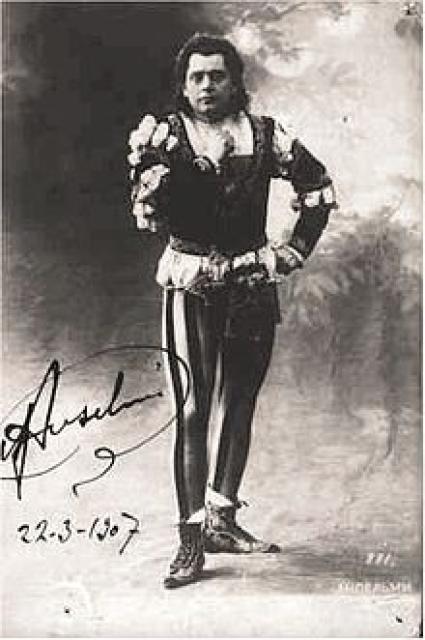
Anselmi was born on November 16, 1876, in Nicolosi, a town on the eastern coast of Sicily near Catania. At the age of 12, he became a student at the Naples Conservatory, where he studied violin, piano, composition, and eventually developed an interest in singing. It is unclear when Anselmi discovered his vocal talent and who his vocal instructor was, but by the time he turned 16, he was already part of a theater troupe performing operettas and touring Italy and the Middle East.
Career Beginnings
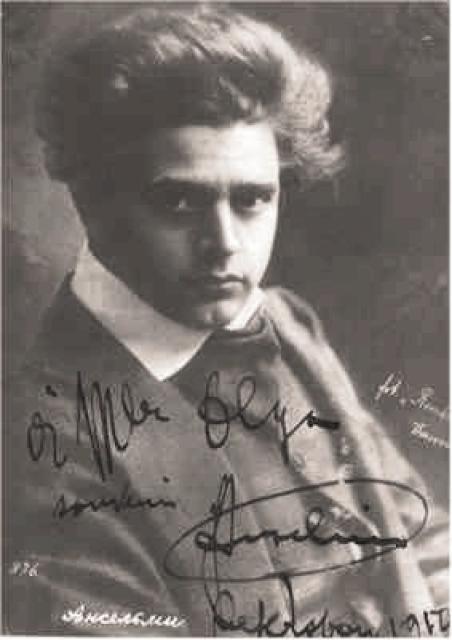
Anselmi's singing caught the attention of music publisher Giulio Ricordi, who recognized his operatic potential and advised him to continue his education under the guidance of Luigi Mancinelli, a conductor and pedagogue. While some sources claim that Anselmi made his debut in 1896 as Turiddu in "Cavalleria rusticana" at the Royal Opera in Athens, there are no remaining documentary sources to confirm this. In 1918, Anselmi mentioned in an interview that his debut actually took place slightly later, not in Athens but in Patras, Greece, and his repertoire at the time included not only the role of Turiddu but also tenor parts from "La Traviata," "Rigoletto," and "Il Barbiere di Siviglia."
Rise to Fame
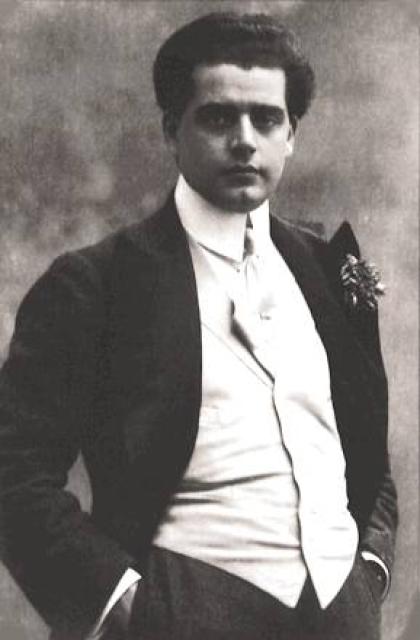
By the end of 1898, Anselmi was performing in Smyrna with a theater troupe led by an impresario named Gonzalez. With this troupe, he toured Athens, Istanbul, and Alexandria, sometimes performing up to five times a week. In 1900, Anselmi made his debut in Genoa, where he sang the Duke, Rodolfo, and Edgardo in "Lucia" alongside Fanny Toresella. This performance marked the beginning of his rapid career ascent. Later that same year, Anselmi performed at Teatro San Carlo in Naples in Pietro Mascagni's opera "Le Maschere." In 1901, he was invited to London, where he made his debut at Covent Garden as the Duke in "Rigoletto." He also sang alongside Australian soprano Nellie Melba and performed a solo tenor part in Verdi's "Messa da Requiem." Although London critics were mostly disappointed by Anselmi's performance style and wrote numerous unfavorable reviews, he became a favorite of the public and sang intermittently at Covent Garden until 1909.
International Success
Following his success at Covent Garden, Anselmi received invitations to perform at Teatro alla Scala in Milan in 1904 and at the Monte-Carlo Opera in 1908. He was particularly loved in Buenos Aires, where he sang at Teatro Colón, as well as in Brussels, Berlin, and Vienna. However, his true triumph awaited him in St. Petersburg, where he frequently performed alongside Lina Cavalieri, as well as in Warsaw and especially Madrid, where his popularity outshone that of Enrico Caruso. The audience particularly adored his interpretations of Cavaradossi, Loris in "Fedora," Maurizio in "Adriana Lecouvreur," Osaka in "Iris," Lensky, Edgardo, Nadir in "Les Pecheurs de perles," and many others.
Later Years and Legacy
The outbreak of World War I significantly affected Anselmi's relatively short career, reducing his performances throughout Europe. By the time the war ended, he decided to retire from the stage. Like many other renowned singers of his generation, Anselmi turned to teaching and occasionally performed in concerts. His last performance took place in 1926 at a charity concert in Rapallo, where he not only sang but also played the violin and accompanied his students.
On May 27, 1929, at the age of 52, Giuseppe Anselmi passed away from pneumonia in Zoagli, a small town in the Liguria region of Italy. He had a deep attachment to Madrid and bequeathed his heart to the city, which was placed in an urn at the Royal Theater museum.


