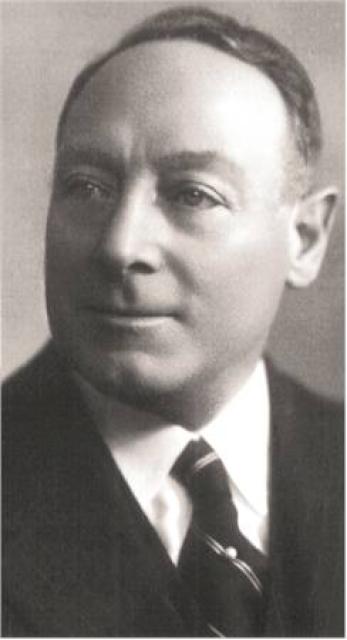
Giuseppe De Luca
 USA
USABiography of Giuseppe De Luca
Giuseppe De Luca was a famous Italian operatic baritone who achieved his greatest triumph performing at the Metropolitan Opera in New York. He participated in the world premieres of two operas by composer Giacomo Puccini: in 1904, he sang the role of Sharpless in "Madama Butterfly" on the stage of La Scala in Milan, and in 1918, he performed the leading role in the comic opera "Gianni Schicchi" at the Metropolitan Opera.

Early Life and Education
De Luca, the son of a blacksmith, was born on December 25, 1876, in Rome. As a young boy, he sang in a church choir. When his voice matured, a wealthy patron paid for his vocal lessons at the Rome Conservatory. There, De Luca studied under two exceptional teachers, composer Venceslao Persichini, who also taught renowned Italian baritone Mattia Battistini, and his contemporary baritone Titta Ruffo, as well as Antonio Cotogni, who taught for many years at the Saint Petersburg Conservatory.

Career
De Luca made his professional operatic debut in Piacenza in 1897, singing the role of Valentin in Charles Gounod's "Faust." His debut was a success, and he began receiving job offers from the most significant European theaters. From 1902 to 1910, he performed at Italy's most famous theater, La Scala, and in 1907, he made his London debut at the Royal Opera House, Covent Garden. Later, De Luca moved to the United States, where he became the leading baritone at the Metropolitan Opera and remained so for 20 years, from 1915 to 1935, enjoying a remarkably long career for an opera singer. Additionally, he briefly returned to the Metropolitan Opera in the 1939-1940 season.
Teaching and Repertoire
After retiring, De Luca taught vocal at the Juilliard School, one of America's largest conservatories. In addition to the roles of Sharpless in "Madama Butterfly" and Gianni Schicchi, De Luca's repertoire included the roles of Marquis de Saluces in Jules Massenet's "Grisélidis," Michonnet in Francesco Cilea's "Adriana Lecouvreur," Gleby in Umberto Giordano's "Siberia," and Sancho Panza in Jules Massenet's "Don Quichotte" alongside Feodor Chaliapin. He received the highest praise from critics and audiences alike. He possessed a vast range of operatic roles, ranging from comedic works and bel canto to the main characters of Verdi and Puccini. During his time at La Scala, he even sang Wagner on occasion, although he typically avoided the German language and sang only in Italian and French. Fortunately for modern listeners, De Luca's elegant vocalism is preserved in numerous recordings he made in Italy and the United States throughout the early 20th century. Some of these recordings feature him singing alongside other great opera singers, including Enrico Caruso, Giovanni Martinelli, Beniamino Gigli, Elisabeth Rethberg, Rosa Ponselle, and Ezio Pinza.
Legacy and Personal Life
De Luca was considered a master of lyrical legato, and the surviving recordings confirm that his singing style was truly impeccable in this regard. Despite his small stature, his voice did not possess an innate, massive power. However, De Luca turned it into a perfect instrument and sounded magnificent even in large theater halls. In his prime years, his vocal had an exceptional beauty of sound in the middle register. He was an intelligent and versatile actor, and it is believed that he excelled in lively and witty comedic roles. De Luca died on August 26, 1950, in New York City at the age of 73.


