Giustav Kaybott
 France
- Gustave Caillebotte: The Impressionist Painter and Patron
- Artistic Influences and Education
- Inheritance and Patronage
- Artistic Style
- Later Career and Death
- Legacy and Collection
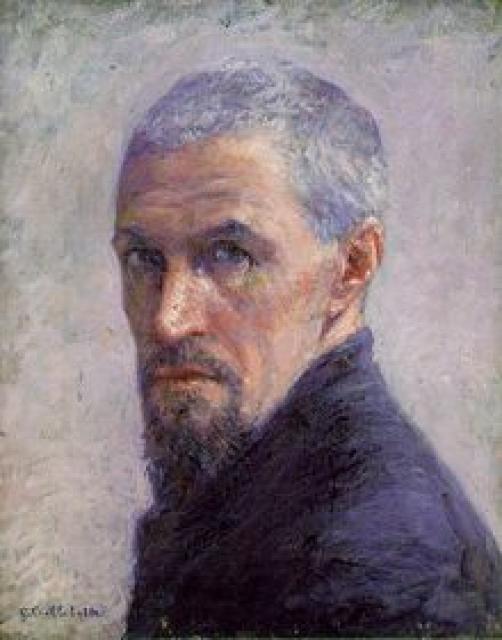
Gustave Caillebotte: The Impressionist Painter and Patron
Early Life and FamilyGustave Caillebotte was born on August 19, 1848, into an affluent Parisian family. His father, Martial Caillebotte, inherited a textile business and served as a judge at the Seine Tribunal of Commerce. After two prior marriages, Martial married Gustave's mother, Céleste Daufresne. Gustave had two brothers, René (1851-1876) and Martial (1853-1910).
The family resided at their house in the Rue du Faubourg-Saint-Denis until 1866, when Martial built a new home on Rue Miromesnil. During summers, the Caillebottes spent time in Yerres, a town on the Yerres River. It was around this period that Gustave began to show an interest in painting.
Artistic Influences and Education
Caillebotte's paintings frequently depict his family and everyday life. "The Young Man at His Window" (1875) portrays René in the Rue de Miromesnil home, while "Oranges" (1878) shows Martial with his cousin Zoé in their Yerres garden. "Portraits in the Countryside" (1875) depicts his mother, aunt, cousin, and a family friend.
Caillebotte studied law and obtained his license to practice in 1870. However, he soon after participated in the Franco-Prussian War. Following the war, he enrolled in Léon Bonnat's studio to seriously pursue painting. In 1873, he entered the École des Beaux-Arts, but his attendance was likely sporadic.
Around this time, Caillebotte met and befriended artists outside the official French academies, including Edgar Degas and Giuseppe de Nittis. He attended the first Impressionist exhibition in 1874, although he did not exhibit there.
Inheritance and Patronage
Upon the death of his father in 1874 and his mother in 1878, Caillebotte inherited a substantial fortune that allowed him to paint without financial concern. He used his wealth to support Impressionist exhibitions and his fellow artists, including Claude Monet, Auguste Renoir, and Camille Pissarro, by purchasing their works and—in Monet's case—paying his studio rent.
Caillebotte also indulged in his passions, such as stamp collecting (his collection is now in the British Museum), cultivating orchids, yacht building, and even textile design. The women depicted in his paintings "Madame Boissier Knitting" (1877) and "Portrait of Madame Caillebotte" (1877) may have stitched embroidery patterns created by the artist.
Artistic Style
Caillebotte painted in the Realist style. Like his predecessors Jean-François Millet and Gustave Courbet, as well as his contemporary Degas, Caillebotte aimed to portray reality as he observed it, eschewing the overly dramatic or romanticized depictions common in painting. He also shared the Impressionists' commitment to capturing the fleeting effects of light.
Caillebotte painted numerous family scenes, interiors, and landscapes in Yerres. However, he is best known for his Parisian paintings, such as "The Floor Scrapers" (1875), "The Pont de l'Europe" (1876), and "Rainy Day in the Batignolles Quarter" (1877). These works provoked controversy due to their unadorned subject matter and exaggeratedly deep perspective.
The tilted plane, common in these paintings, reflects the influence of Japanese prints and the emerging technology of photography. Caillebotte's cropping and foreshortening techniques may also have been influenced by photography. In many works, he uses an elevated viewpoint, as seen in the depictions of balconies in "Vue des toits, effet de neige" (1878) and "Boulevard vu d'en haut" (1880).
Later Career and Death
Caillebotte's painting career declined in the 1890s, as he ceased producing large-scale canvases and exhibited less frequently. In 1881, he acquired an estate at Petit-Gennevilliers on the banks of the Seine near Argenteuil and moved there permanently in 1888. He devoted himself to gardening and building racing yachts, spending time with his brother Martial and their friend Renoir, who often visited Petit-Gennevilliers. Some sources claim that Caillebotte had an affair with the much younger Émilie Schlauch shortly before his death, but this remains unverified.
Caillebotte passed away on February 21, 1894, while working in his garden at Petit-Gennevilliers. He was buried at the Père Lachaise Cemetery in Paris.
Legacy and Collection
For many years, Caillebotte's reputation as a patron overshadowed his recognition as an artist. It was not until seven decades after his death that art historians began to re-evaluate his artistic legacy.
In his will, Caillebotte bequeathed his extensive painting collection to the French government. It included sixty-eight works by artists such as Camille Pissarro (19), Claude Monet (14), Pierre-Auguste Renoir (10), Alfred Sisley (9), Edgar Degas (7), Paul Cézanne (5), and Édouard Manet (4). At the time of his death, the Impressionists were still largely dismissed by the French art establishment, which favored the more conservative Academic style. Caillebotte stipulated that his collection be displayed at the Luxembourg Palace, where contemporary art was exhibited, and then at the Louvre.
Unfortunately, the French government did not honor these wishes. In February 1896, it finally reached an agreement with Renoir, Caillebotte's executor, whereby thirty-eight paintings were placed at the Luxembourg Palace. The remaining twenty-nine works—one of which Renoir kept as payment for his executor's services—were offered to the French government twice more, in 1904 and 1908, but both times were refused. When the government finally attempted to claim them in 1928, Caillebotte's son's widow objected. Most of the remaining works were eventually acquired by C. Albert Barnes and are now part of the Barnes Foundation in Philadelphia.
Forty works by Caillebotte himself are currently housed in the Musée d'Orsay. His canvas "Man on a Balcony, Boulevard Haussmann" (1880) sold for over $14.3 million in 2000.