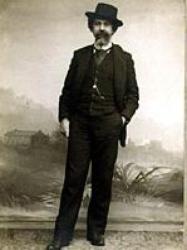
Gourmaelon
Count of Cornouaille and Prince of Brittany
Gourmaëlon emerged as one of Brittany's most enigmatic figures in 908 as Count of Cornouaille and Prince of Brittany. His lineage remains shrouded in mystery. His name, possibly a moniker, initially appeared as "Uumaelon" or "Wrmaëlon," later evolving into "Gurmhailon" before adopting its modern form.
Struggle for Power
During the reign of Alain I the Great, Gourmaëlon served as Count of Cornouaille. Following Alain's death in 907, a power struggle ensued among his heirs: Count Mathuedoi of Poher, Alain's son-in-law, and Count Rudalt of Vannes. Fulk I, Count of Anjou, ultimately claimed the title of Count of Nantes. Gourmaëlon seized this opportunity to gain control of Brittany, but he refrained from claiming the title of king and failed to fully unify the region.
Reign and Death
Little is known about Gourmaëlon's rule. Records from the cartulary of Redon Abbey mention him as a witness in several deeds between 909 and 913. The last such reference dates to October 25, 913, where he is referred to as "Gurmahilon comitem qui tunc monarchiam Britanniae regebat" and signed an act following Bishop Bili of Vannes and Count Mathuedoi of Poher.
During Gourmaëlon's reign, Norman raids on Brittany intensified. Based on manuscript 476 from the Angers Library, it is believed that Gourmaëlon met his demise in late 913, possibly in battle against the Normans who subsequently seized much of Brittany.
Marriage and Children
Gourmaëlon's wife remains unknown. From the Redon Abbey cartulary, he is known to have had at least one son, Daniel (died after October 25, 913).