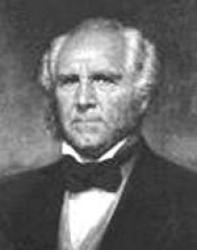
Grover Cleveland
 USA
USA- Biography of Grover Cleveland
- Early Career and Political Rise
- Presidential Career
- Second Term and Legacy
Biography of Grover Cleveland
Grover Cleveland was the 22nd and 24th President of the United States, serving two non-consecutive terms with a four-year gap in between. He was born on March 18, 1837, in Caldwell, New Jersey. His family moved to Fayetteville and then Clinton, New York. Cleveland worked in a store and later in a blind asylum before deciding to pursue a career in law. He stopped in Buffalo, New York, on his way west and secured a position as a clerk in a law firm. After several years of studying, he was admitted to the bar.
Early Career and Political Rise
Cleveland steadily advanced in his legal profession and was appointed Assistant District Attorney of Erie County, New York, in 1863. He later served as sheriff and returned to his law practice after his term ended. In 1881, he was elected mayor of Buffalo. By 1882, the Republican Party in New York had been tarnished by corruption, and the Democrats saw an opportunity to nominate Cleveland as their candidate for governor. With support from various groups in both parties, he won the governorship with a significant majority. During his term, Cleveland angered the party bosses by refusing to distribute positions based on party lists and supporting Theodore Roosevelt's campaign for municipal reforms.
Presidential Career
In 1884, Cleveland was nominated as the Democratic candidate for President, despite opposition from the "mugwumps," a faction within the party. In the second round of voting, Democrats chose Cleveland as their candidate, and he won the presidency by a margin of 29,214 votes. At the age of 48, he took office on March 4, 1885. Cleveland faced challenges during his presidency, including disagreements within his own party and opposition from Republicans. He refused to dismiss Republican officials and appointed two Southerners to his cabinet, which further alienated some Republicans. He also vetoed over 100 bills, many of which dealt with pensions and were automatically passed by Congress. His strict stance on tariff reduction, which he believed favored special interests and caused a dangerous surplus in the treasury, also drew opposition.
Second Term and Legacy
In 1888, Cleveland was nominated for re-election, but the Democratic Party did not support the Mills Tariff Bill. He ultimately lost the election to Benjamin Harrison, although he garnered significant support from voters. After leaving office, Cleveland returned to New York and resumed his law practice. However, after the passage of the McKinley Tariff Act in 1890, a nationwide movement started to nominate Cleveland again. He became the Democratic candidate for President in 1892 and won the election by promising tariff reform. When Cleveland took office on March 4, 1893, the country was hit by an economic crisis. Despite the challenges, Cleveland maintained an independent foreign policy, rejecting the annexation of Hawaii and supporting the Monroe Doctrine during the border conflict between Britain and Venezuela.
Cleveland's influence waned within the Democratic Party, and he had limited impact on the party's convention in 1896. Many former supporters of Cleveland disagreed with the party's nomination of William Jennings Bryan, who advocated for the free coinage of silver. Cleveland retired to Princeton, New Jersey, in 1897 and became a member of Princeton University's board of trustees. He passed away on June 24, 1908, in Princeton.