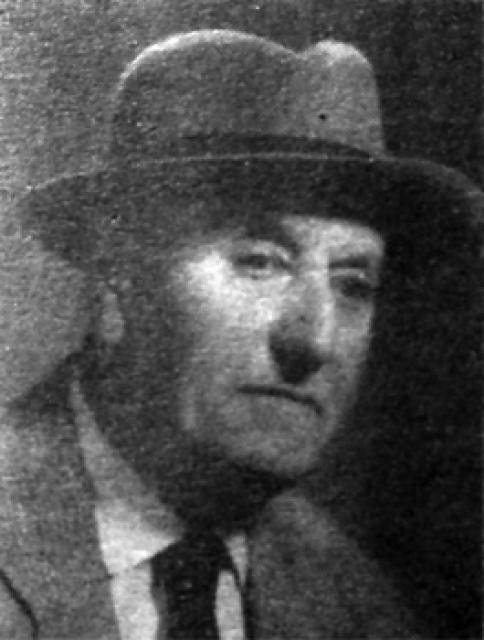
Gurgen Aaykuni
- Early Life and Education
- Revolutionary Activity
- Literary Debut
- Revolutionary and Political Roles
- Founding of the Communist Party of Armenia
- Literary and Translation Work
- Political and Diplomatic Activities
- Repression and Rehabilitation
Early Life and Education
Born in 1889 in Western Armenia to a civil servant, Avetik Isahakyan embarked on his educational journey at the Gevorgian Seminary in Echmiadzin from 1896 to 1906. However, his expulsion for revolutionary activities led him to pursue his studies at the Moscow Commercial Institute.
Revolutionary Activity
In 1905, Isahakyan joined the Russian Social Democratic Labour Party (RSDLP) and actively engaged in revolutionary work in Armenia, Moscow, and Central Asia. From 1906 to 1909, he participated in the Social Democratic organizations of Kagizman, spread propaganda among railway workers in Tiflis and laborers in Batumi, and disseminated leaflets and proclamations.
Literary Debut
Isahakyan's literary debut came in 1911 with the publication of his poem "Shepherd Samuel." In 1915, he released "The Breath of Spring." During World War I, he contributed articles to the Armenian press, denouncing the imperialistic nature of the conflict and exposing the Turkish government's role in the Armenian Genocide.
Revolutionary and Political Roles
Following the February Revolution of 1917, Isahakyan played a significant role in organizing among workers and soldiers in Tiflis, Alexandropol, Kars, and Sarikamysh. He participated in the First Congress of Western Armenians in Yerevan and was elected Deputy Chairman of the Western Armenian National Council. As the leader of the Bolshevik organization in Alexandropol, he edited the newspaper "Nor Kyank" ("New Life").
Founding of the Communist Party of Armenia
In November 1917, Isahakyan collaborated with a group of Armenian communists to establish the Communist Party of Armenia, which was fully formed by early 1918.
Literary and Translation Work
During the post-1917 period, Isahakyan wrote numerous poems, including "The Eagle's Feast," "Golgotha," "Volcanic Eruptions," "Titan," and "Red Devil." The latter two were also published in Russian. He translated Walt Whitman's poetry and Maxim Gorky's novel "Mother" into Armenian.
Political and Diplomatic Activities
In 1918, Isahakyan served as a member of the Presidium of the Central Executive Committee of the North Caucasian Soviet Republic and as People's Commissar for Nationalities. He represented the Communist Party of Armenia at the founding congress of the Third International in March 1919, where he signed its manifesto. Throughout the 1920s and 1930s, he held various positions in the Commissariat for Armenian Affairs, edited Armenian newspapers, and played a prominent role in the Caucasus and Moscow.
Repression and Rehabilitation
Isahakyan faced political repression in 1937 and spent over a decade in exile. Upon his release in 1947, he worked in Russia. In 1954, he returned to Yerevan, where he continued to live until his death.


