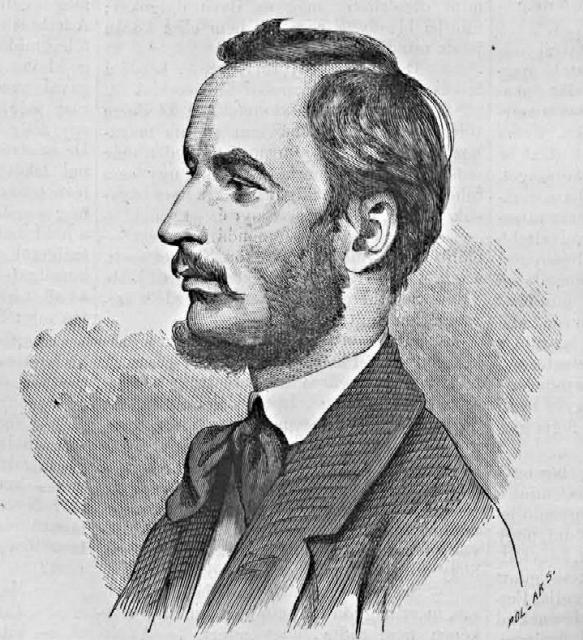
Gusztav Frigyes Keleti
 Hungary
- Early life and artistic training
- Painting and criticism
- Building a national art school
- Final years and legacy
Gusztáv Keleti was a Hungarian painter, graphic artist, art critic, and educator whose influence reached well beyond his landscapes. He helped establish a national system for training artists and drawing teachers, directed the school that grew from that effort, and became one of the most influential voices in nineteenth-century Hungarian art. His career also carried a contradiction: he championed artistic education while holding firmly to academic standards that put him at odds with some of the era’s modern innovators.
Early life and artistic training
Keleti was born Gusztáv Klette on December 13, 1834, in Pressburg, now Bratislava, Slovakia. His father, Károly Klette, was a court painter and drawing teacher, and Keleti grew up in an environment shaped by art. He studied in Pest and began university law studies in Pest and Vienna, but gradually turned toward painting. In Vienna he trained at the school of Karl Rahl, where he developed a disciplined academic approach to drawing and composition.
For a time, Keleti worked as a tutor in the household of statesman József Eötvös. He painted a portrait of Eötvös’s young son Loránd, who would later become a renowned physicist. Keleti’s connection to the Eötvös family also proved important for his institutional career: after the 1867 Compromise, Eötvös became minister of public education and invited Keleti to study European models for art instruction.
Painting and criticism
Keleti became known for romantic landscapes that combined careful technique with a strong sense of place. His works included views of Pest-Buda and surrounding countryside, among them scenes from Normafa and Csillagvölgy. His best-known painting, The Park of the Exiled (1870), depicts an abandoned garden and came to be read as an image of patriotic grief after the defeat of the Hungarian Revolution of 1848–49.
From the mid-1860s onward, Keleti also wrote art criticism. He helped the public understand artists and artworks through clear, close readings, and he was among the early critics to recognize the talent of Gyula Benczúr. Yet his standards were conservative. His criticism of Pál Szinyei Merse’s painting The Lark, particularly his description of its color as a kind of “color delirium,” hurt the younger artist and contributed to Szinyei’s temporary withdrawal from public artistic life. Keleti also dismissed early drawings sent to him by Tivadar Kosztka Csontváry. These episodes show how a critic who could identify emerging talent could also discourage work that departed from his own academic expectations.
Building a national art school
Keleti’s most enduring institutional achievement began with a study tour of European art academies. In 1870, he published a major report on art education abroad and the needs of Hungary. He argued that the country should first strengthen the training of drawing teachers rather than begin by creating a full academy. Drawing, in his view, was the foundation for public taste and for the development of Hungarian art.
Following his proposal, the National Hungarian Royal Model Drawing School and Drawing Teachers’ Training School opened in 1871. It became a predecessor of today’s Hungarian University of Fine Arts. Keleti served as its first director and remained in the role until his death. He was also active in the National Hungarian Fine Arts Society, a founding member from 1861, and directed the Műcsarnok exhibition hall from 1874. In 1874, he became a corresponding member of the Hungarian Academy of Sciences.
Final years and legacy
Keleti’s work as an administrator, critic, and organizer gradually overshadowed his painting. Emperor Franz Joseph ennobled him in 1901, after which he used the name Kelety. In his later years he suffered from serious lung disease and died in Budapest on September 2, 1902.
His reputation rests on several connected contributions: romantic landscapes that became part of Hungary’s national artistic memory, a lasting role in the creation of formal art education, and a body of criticism that helped shape public taste. Keleti’s influence was not always comfortable for the artists he judged, but his schools and writing helped define the cultural institutions through which Hungarian art developed.





