Gyde Jensen
 Germany
- Education and early political work
- A young parliamentarian in a prominent role
- From committee chair to party leadership
- Public image and political significance
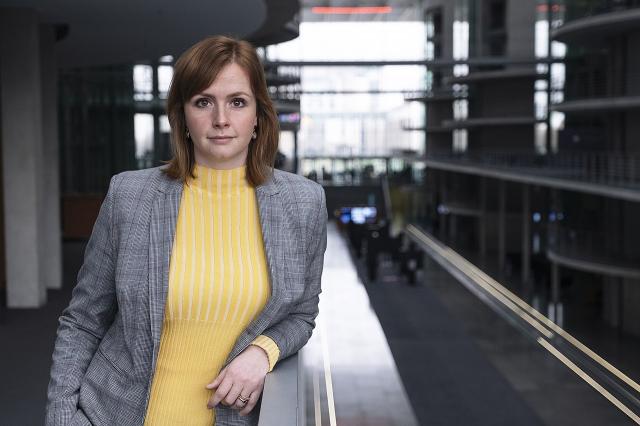
Gyde Jensen is a German liberal politician whose rise in national politics was unusually fast. Elected to the Bundestag in 2017 at 28, she soon became chair of its Committee on Human Rights and Humanitarian Aid, at the time the youngest person to lead a committee in the parliament’s history. Her work brought her into debates over political prisoners, freedom of expression, and human-rights policy toward China and other authoritarian governments.
Education and early political work
Born on 14 August 1989, Jensen grew up on Germany’s northern coast in Schleswig-Holstein. She completed secondary school in Eckernförde in 2009, then studied English and North American studies at the University of Kiel, earning a bachelor’s degree in 2012. She continued with graduate studies in international politics and international law, completing a master’s degree in 2017.
Jensen joined the Free Democratic Party (FDP) and its youth organization, the Young Liberals, in 2010. She served on the Schleswig-Holstein board of the Young Liberals from 2011 to 2014 and joined the state FDP board in 2015. Before entering parliament, she worked as a communications officer for the Friedrich Naumann Foundation for Freedom, the party-affiliated foundation.
A young parliamentarian in a prominent role
Jensen entered the Bundestag in 2017 through the FDP’s Schleswig-Holstein list. At 28, she was the youngest member of parliament at the time. In January 2018, she was elected chair of the 17-member Committee on Human Rights and Humanitarian Aid. The appointment gave a first-term politician a prominent platform and made her the youngest committee chair in the Bundestag’s history.
As chair, she worked on a wide range of international cases and political conditions. Her public interventions addressed the treatment of Uyghurs in China, the erosion of civil liberties in Hong Kong, and the imprisonment of journalists and human-rights defenders in countries including Turkey and Vietnam. She also sought to lead a committee visit to China’s Xinjiang region. The trip did not go ahead after the Chinese authorities did not grant permission; Jensen later said she believed the committee’s refusal to soften its criticism may have played a part.
She also served in the Parliamentary Assembly of the Council of Europe, where she worked on legal affairs, human rights, equality, and later education and media. The international parliamentary role extended her human-rights work beyond Germany’s national institutions.
From committee chair to party leadership
After the 2021 federal election, Jensen returned to the Bundestag for a second term and became a deputy chair of the FDP parliamentary group in December 2021. She remained a member of the party’s federal executive board and continued in the Council of Europe delegation. In 2019, she became a mother to a daughter, balancing family life with a demanding parliamentary schedule.
Jensen’s parliamentary career ended after the 2025 federal election, when the FDP received 4.3 percent of the national vote and failed to enter the new Bundestag. She has remained active in party politics: as of 2026, she serves on the FDP Schleswig-Holstein state executive board and is a member of the party’s Basic Program Commission.
Public image and political significance
Jensen became known as a young, prominent voice on human rights within a party more often associated with economic and civil-liberties policy. In interviews she has spoken about the slow pace of parliamentary work, the need for more women in politics, and the difficulty women face in political life. Her trajectory—from regional party work to committee chair and parliamentary-group leadership—made her one of the FDP’s most visible figures of her generation, even as the party’s electoral setback brought her Bundestag service to a close.