Haile Mariam Mengistu
 Ethiopia
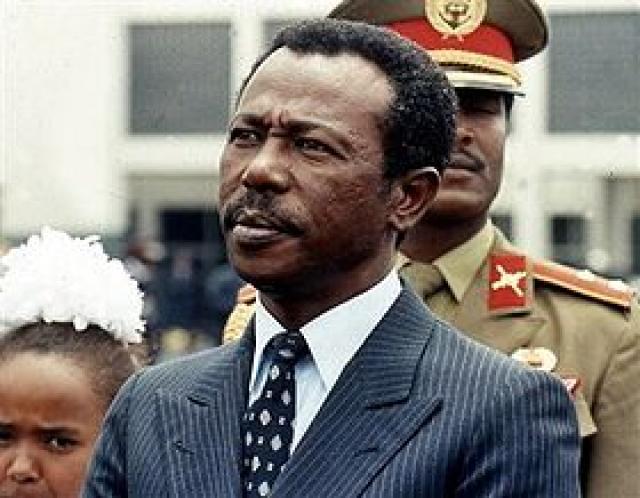
Biography of Haile Mariam Mengistu
Haile Mariam Mengistu, a military and political figure in Ethiopia, was born on May 21, 1937 or 1941 in the small town of Walaita in the Harari province. Little is known about his early life, as his biography remains largely mysterious. He was raised in an aristocratic family in Addis Ababa. Despite completing only primary school, Mengistu was admitted to the Holleta Military Academy in 1959, thanks to his uncle who was a minister. He graduated in 1966 as a second lieutenant and later received additional training in the United States.
After returning to Ethiopia, Mengistu served in various military positions and rose through the ranks. In 1974, he was involved in the overthrow of Emperor Haile Selassie I and became one of the six members of the temporary military administrative council. He was later appointed as the Chairman of the Coordinating Committee of the Armed Forces, Police, and Territorial Army, the leading body of the revolutionary movement in Ethiopia.
During his time in power, Mengistu implemented a socialist agenda and carried out brutal crackdowns on opposition groups. He was known for his ruthless tactics, earning him the nicknames "Red Negus" (Red King), "Black Stalin," and "The Butcher of Ethiopia." His regime was responsible for the deaths of tens of thousands of people, with estimates ranging from 100,000 to 500,000 victims.
Mengistu was also involved in the Ethiopian-Somali conflict and led the Ethiopian army in a successful counteroffensive against Somali forces in the Ogaden region. He received military support from the Soviet Union and Cuba. Additionally, he faced separatist movements in Eritrea and Tigray, which he ruthlessly suppressed.
In 1991, Mengistu's regime was overthrown by rebel forces, and he fled to Zimbabwe, where he still resides. He has been convicted in absentia for genocide and crimes against humanity by Ethiopian courts.
Today, Mengistu's rule is widely condemned for its human rights abuses and the economic hardship it brought to Ethiopia. His legacy remains controversial, with some viewing him as a nationalist hero and others as a brutal dictator.