Hammer DeRoburt
- Hammer DeRoburt: The Founding Father of Nauru
- Surviving Adversity and Ascending to Leadership
- Negotiating Independence and Securing Economic Benefits
- Dissolution and Re-election: A Test of Support
- International Recognition and Legacy
Hammer DeRoburt: The Founding Father of Nauru
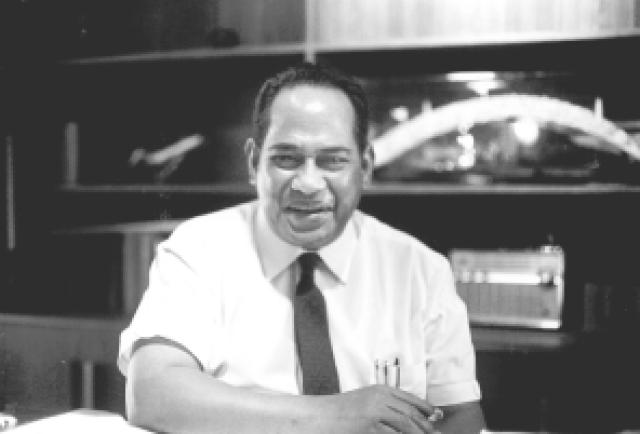
Hammer DeRoburt, an Nauruan politician, emerged as the first President of the Republic of Nauru. His steadfast leadership and diplomatic skills played a pivotal role in shaping the island nation's destiny.
Surviving Adversity and Ascending to Leadership
Born into Japanese captivity, DeRoburt remained resilient and returned home after World War II. He quickly rose through the ranks of the Nauruan Local Government Council in the 1950s and assumed the role of Head Chief in 1955.
Negotiating Independence and Securing Economic Benefits
In 1965, DeRoburt spearheaded negotiations with Australia, New Zealand, and the United Kingdom regarding phosphate mining rights on the island. Through astute diplomacy, he secured a substantial increase in royalties and a $225 million compensation package for 500 Nauruan families upon the depletion of the resource.
#Proclaiming Independence and Guiding the Nation through Political Turbulence
On January 31, 1968, DeRoburt led Nauru to independence and became its inaugural President. However, his tenure was marked by political challenges. In 1976, the parliament elected Bernard Dowiyogo as President, only for DeRoburt's supporters to orchestrate Dowiyogo's resignation in 1978, reinstating DeRoburt.
Dissolution and Re-election: A Test of Support
In 1980, DeRoburt dissolved parliament and called for new elections. The results affirmed his popularity, as he was re-elected as President in 1980, 1983, and 1986. His reign continued until 1989, when he faced a vote of no confidence.
International Recognition and Legacy
DeRoburt's contributions were recognized by Queen Elizabeth II of the United Kingdom, who conferred upon him a knighthood in 1982. He passed away in 1992 in Melbourne, Australia, leaving behind a legacy as the founding father of an independent and prosperous Nauru.