Otto von Habsburg
 Germany
- Biography of Otto von Habsburg
- The Regency and Influence of Miklós Horthy
- Education and Political Career
- Legacy and Death
Biography of Otto von Habsburg
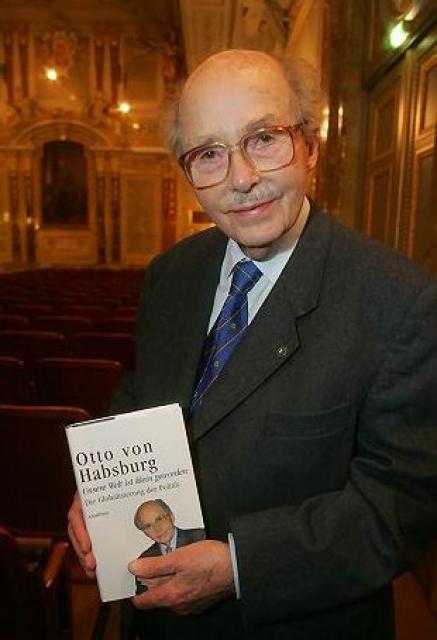
Otto von Habsburg, born in November 1912 in Reichenau an der Rax, Austria, was a politician and the son of the last Emperor of Austria. He was the eldest of three sons of Charles I and Zita di Borbone-Parma. At his baptism, he was given the full name Franz Joseph Otto Robert Maria Anton Karl Max Heinrich Sixtus Xavier Felix Renatus Ludwig Gaetan Pius Ignatius. It was believed that he would inherit the power over the country and its neighboring countries. However, World War I brought an end to the monarchy in Europe, and Otto's path to the throne was blocked.

The Regency and Influence of Miklós Horthy
In 1916, Otto became a prince when his father abdicated due to old age. Hungary and Austria became independent, and monarchy in Europe came to an end. Miklós Horthy became the regent of Hungary. Horthy, a Calvinist, initially supported Hitler but later criticized his actions, especially the genocide of Jews and his interference in European affairs. Otto found inspiration in Horthy's ideas and would uphold them throughout his life.

Education and Political Career
Otto studied social sciences and politics at the Catholic University of Leuven and graduated in 1935. During his studies, he expressed his belief that he could have been ruling the country if the monarchy had not been destroyed. He also expressed disappointment in the people of the country, whom he believed did nothing to prevent the downfall of the monarchy. As World War II began, Otto held negative views towards Hitler and the Nazi party. After Germany's defeat, there were plans to eliminate Otto and the royal family, but he was warned in advance by American intelligence agencies. He subsequently moved to Washington, D.C. with his relatives.
After the war, Otto returned to Europe and actively participated in the political life of the region. He worked towards bringing together the war-weakened countries. In 1961, he renounced his claims to the throne, which was a significant step for him as it relieved him of the responsibility to uphold centuries-old family traditions and placed him on equal footing with other citizens. Throughout the remainder of his life, Otto sought to bring about change and promote peace. He was involved in organizing the European Picnic, a demonstration of peace on the Austro-Hungarian border, during which people could escape to the West without fear of persecution. In 2010, his wife, Princess Regina of Saxe-Meiningen, passed away.
Legacy and Death
Following his wife's death, Otto rarely appeared in public. He passed away in his countryside home in July 2011 at the age of 99. According to his secretary, the politician and eldest son of the last Emperor of Austria died peacefully in his sleep. In accordance with family tradition, Otto's body was buried in the family crypt in Vienna, while his heart was interred in Hungary. He is survived by his younger brother, seven children, 22 grandchildren, and two great-grandchildren, with his brother being the last descendant of Charles I, the former Emperor of Austria.