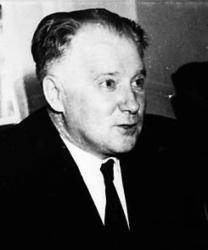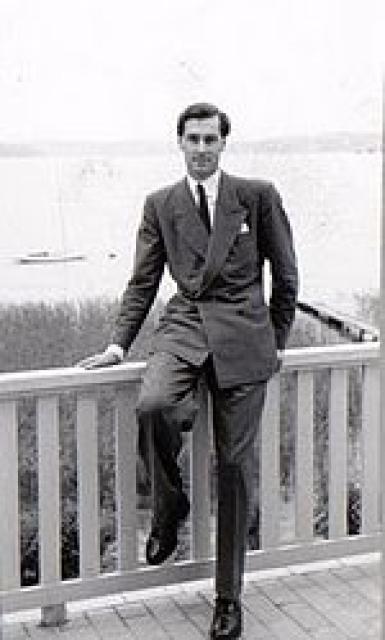
Harald Edelstam
 Sweden
- Biography of Harald Edelstam
- Early Life and Education
- Diplomatic Career
- A Heroic Act
- Later Years and Legacy
Biography of Harald Edelstam
Harald Edelstam (March 17, 1913, Stockholm - April 16, 1989) was a Swedish diplomat and ambassador. He gained recognition for his efforts in saving the lives of many opposition members following the military coup in Chile in 1973. Edelstam also played a significant role in rescuing resistance fighters and Jews during World War II. He was often referred to as the "second Raoul Wallenberg" and the "controversial Swedish diplomat."
Early Life and Education
Harald Edelstam was born into a noble family. His parents were chamberlain Fabian Edelstam and Hilma Dickinson. He studied at the Royal Military Academy in Karlstad and passed his first state examination in law in 1939. Following this, Edelstam obtained the position of attaché at the Swedish Foreign Ministry and was assigned to serve in Rome that same year. During World War II, Edelstam also served in Berlin (1941) and Oslo (1942). In the latter half of the war, he served as a diplomat in occupied Norway and assisted resistance fighters and Jews. He established relationships with German military commanders in Norway, as well as the heads of local Nazi organizations and the Gestapo. Edelstam acted as a mediator between the Germans and the Norwegian Resistance Movement, where he acquired the nickname "Black Anemone," alluding to the character from the novel and film "Red Anemone."
Diplomatic Career
From 1948 to 1952, Edelstam served as the First Secretary of the Embassy in The Hague, followed by a posting in Warsaw from 1952 to 1954. He then worked as a secretary at the Ministry of Foreign Affairs for several years before being appointed Deputy Head of the Department. In 1958, he assumed the role of Counselor at the embassy in Vienna. From 1962 to 1965, Edelstam served as the Consul General in Istanbul, followed by a posting as Ambassador to Indonesia from 1965 to 1969. In 1969, he became the Ambassador to Guatemala, where he supported rebels opposing the local government. In 1971, Edelstam was appointed by Olof Palme as Sweden's ambassador to Santiago, Chile. He openly expressed his sympathy for socialist President Salvador Allende. Following Allende's overthrow, Edelstam saved the lives of many Chileans by providing them with escort and political asylum in Sweden. Among those he rescued were Miriam Contreras, Allende's personal secretary, the four-year-old daughter of Chilean communist leader Volodia Teitelboim, Peruvian leftist guerrilla Hugo Blanco, and numerous others. Additionally, Edelstam helped citizens from other South American countries who were fleeing military dictatorships in Uruguay and Brazil. Many of the political refugees he saved were members of the radical leftist organization Tupamaros, who were fighting against the Uruguayan dictatorship.
A Heroic Act
Edelstam's most courageous act took place in the Chilean capital during the siege of the Cuban embassy by tanks. The Cubans were engaged in fierce resistance but were clearly outnumbered and outgunned by the coup plotters. Harald Edelstam stood in front of the Cuban embassy, holding the Swedish flag, forcing the tanks to cease fire. The Cubans managed to board buses and, with the assistance of the Swedish embassy, were able to escape to their homeland. When asked why he did it, Edelstam allegedly replied, "Because I cannot tolerate injustice." In total, Edelstam saved the lives of 1300 people. However, the military regime of Augusto Pinochet did not appreciate Edelstam's intervention, and after a diplomatic exchange with Sweden, demanded the expulsion of the Swedish mission from the country. Later, Edelstam visited Cuba at the invitation of Fidel Castro, where he was hailed as a true hero. In the 1970s, Edelstam became an idol for left-leaning students in Sweden, and rumors circulated that he would receive the Nobel Peace Prize.
Later Years and Legacy
From 1974 to 1979, Edelstam served as Sweden's ambassador to Algeria. He retired in 1979 but continued to assist countless Chilean refugees in integrating into Swedish society. Edelstam passed away from cancer in 1989.