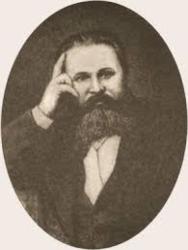
Heinrich Frick
 Germany
Biography of Heinrich Frick
Heinrich Frick was born in 1893 in Darmstadt, Germany. He received his primary and secondary education in Darmstadt. From 1912 to 1916, he studied theology at the universities of Giessen and Tubingen. However, he became deeply interested in the Arabic language and devoted his doctoral dissertation to a comparative analysis of the autobiographies of Al-Ghazali and Augustine's "Confessions". In 1919, Frick defended his doctoral dissertation and began lecturing on the history of religions at the Higher Technical School of Darmstadt.
Academic Career
In 1925, Frick was appointed as a professor at the University of Giessen. In 1929, he was invited to teach theology and the history of religions at the University of Marburg. Until the end of his life, Frick held the chair of systematic theology at the University of Marburg. He also established the Institute of the History of Religions and the Museum of Religious Art at the university. Frick passed away in Marburg in 1952.
Research Works
Frick's list of scientific works includes more than 150 titles, the majority of which are articles, conference papers, lectures, introductions, and so on. Among his few monographs, the most interesting for researchers of religion is "Comparative Religion" (1928). In this work, Frick takes a typological approach to the study of religion, which, in his opinion, significantly differs from the commonly accepted methods of research in the field of religious studies. Accordingly, Frick highlights the typology of religion as an independent discipline within religious studies and develops a series of new concepts for the field, such as "type", "stage", "form", "analogous", "homologous", "morphology", "convergence", and others. In "Comparative Religion", the author presents himself simultaneously as a Christian theologian and as an objective researcher of religion. In an attempt to reconcile these two positions, Frick uses the category of the "sacred", which, after the work of Rudolf Otto, became one of the key concepts in 20th-century religious studies.
Legacy
Heinrich Frick's contribution to the field of religious studies is highly regarded. His typological approach to the study of religion and the development of new concepts have had a lasting impact on the discipline. His book "Comparative Religion" remains a significant work in the field and continues to be of great interest to researchers. Frick's establishment of the Institute of the History of Religions and the Museum of Religious Art at the University of Marburg has also provided valuable resources and platforms for the study and appreciation of various religious traditions and their artistic expressions.