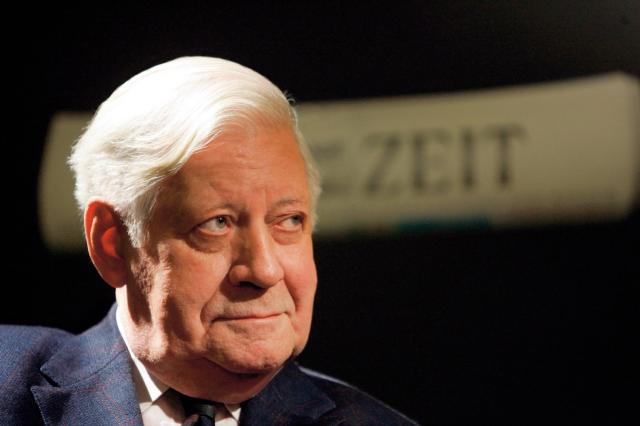
Helmut Schmidt
 Germany
Helmuth Schmidt's Biography
Early Life and CareerHelmuth Heinrich Waldemar Schmidt, the fifth Chancellor of the Federal Republic of Germany (FRG), was born on December 23, 1918, in Hamburg. He was the first of two sons born to school teachers. Schmidt's father was an illegitimate German-Jewish businessman, a fact that his family kept secret for many years.
During his youth, Schmidt was a member of the Hitler Youth until 1936 when his anti-fascist views led to his demotion and expulsion. On June 27, 1942, Schmidt married Hannelore 'Loki' Glaser, his childhood friend. They had two children, Helmut Walter, who tragically died from meningitis in February 1945, and Susanne, who currently works for Bloomberg in London.
During the war, Schmidt served on the Eastern Front, defending Bremen and working in the Ministry of Aviation Industry. He was captured by the Allies in March 1945 and remained in captivity until August. After World War II, Schmidt graduated from the University of Hamburg in 1949, where he studied political science and law. In 1946, he joined the ranks of the Social Democratic Party of Germany (SPD).

Political Career and Chancellorship
From 1952, Schmidt held important positions in the Hamburg State Ministry of Economics and Transport. He was elected to the Bundestag in 1953, and in 1957, he represented the executive authority of the SPD. Known for his outspoken rhetoric, Schmidt earned the nickname "loquacious Schmidt" for his criticism of conservative policies. In 1958, he declined his parliamentary seat to focus on his responsibilities in Hamburg.
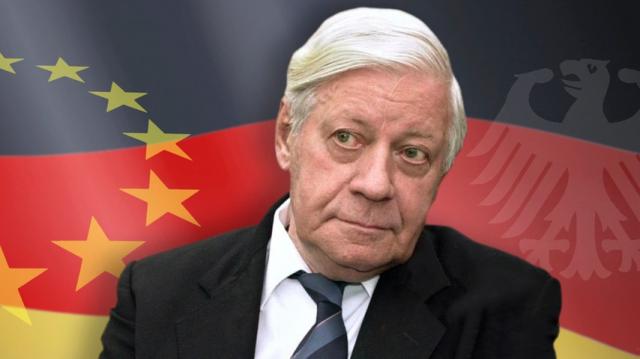
Schmidt held several federal ministerial positions, including defense, economy, finance, and even briefly served as the Minister of Foreign Affairs. He became the Chancellor of West Germany on May 16, 1974, following the scandalous resignation of Willy Brandt. Schmidt's administration focused on addressing the aftermath of the global economic downturn.
As a firm and disciplined leader, Schmidt helped Germany navigate the oil crisis of the 1970s. He also played an active role in improving relations with France. In 1975, Schmidt signed the Helsinki Accords, which led to the creation of the Conference on Security and Cooperation in Europe (CSCE), the precursor to the OSCE.
Between 1979 and 1982, Schmidt's administration pursued an expansionist monetary, credit, and tax policy to reduce unemployment rates. However, this led to a significant budget deficit and fiscal expansion. Towards the end of his tenure, Schmidt shifted away from deficit financing due to worsening economic conditions.
In 1982, when Schmidt attempted to remove coalition members from his cabinet who did not represent the SPD, and aimed to establish a single-party government, the Bundestag responded with a vote of no confidence. Helmut Kohl became the new Chancellor.
Personal Life
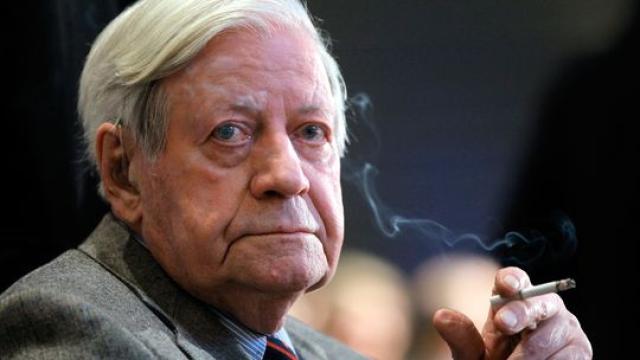
Outside of the political arena, Schmidt was known as a talented pianist, with several recordings of Mozart and Bach piano concertos to his name. He was also a passionate smoker, and in January 2008, German police began investigating reports that Schmidt had been ignoring anti-tobacco laws for decades. However, the prosecutor's office ruled that Schmidt's actions were not intended to encourage Germans to undermine their health.
His wife, Hannelore, passed away on October 21, 2010. In early 2012, at the age of 93, Schmidt announced to the nation that he had found love once again. His new companion was his longtime colleague, 79-year-old Ruth Loach.


