Henry Aldrich
 Great Britain
- Biography of Henry Aldrich
- Education
- Christ Church, Oxford
- Vice-Chancellor of the University of Oxford
- Rectorship
- Death and Legacy
- Talents and Works
- Sense of Humor
Biography of Henry Aldrich
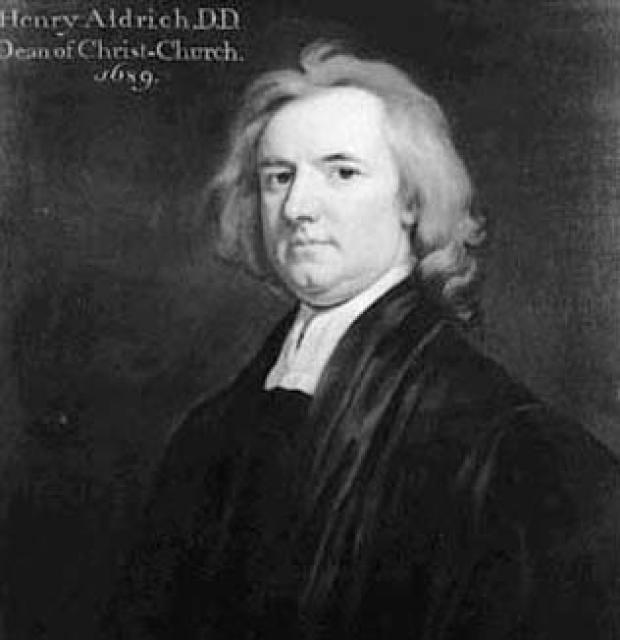
Henry Aldrich was an incredibly talented English theologian and philosopher. He was known for his small work on logic titled "Compendium Artis Logicae".
Education
Aldrich studied at Westminster School under the guidance of Dr. Richard Busby.
Christ Church, Oxford
In 1662, Aldrich joined the ranks of Christ Church, Oxford. By 1689, he became the dean, succeeding the Roman Catholic priest John Massey who had decided to move to the continental part of Europe.
Vice-Chancellor of the University of Oxford
In 1692, Henry Aldrich was appointed as the vice-chancellor of the University of Oxford.
Rectorship
In 1702, Aldrich obtained the position of rector in Wem, Shropshire; however, he continued to live in Oxford.
Death and Legacy
Henry Aldrich passed away on December 14, 1710, in Oxford. He was buried in the Christ Church Cathedral, as he requested no memorial service to be held.
Talents and Works
Aldrich was not only a scholar but also a talented composer. He is best known for his choral compositions and services, many of which were adaptations of Giovanni Pierluigi da Palestrina and Giacomo Carissimi's works. Aldrich's talent extended beyond music, as he was also the architect behind the All Saints Church in Oxford and the Peckwater Quadrangle in Christ Church.
Sense of Humor
Henry Aldrich's perpetual cheerfulness and sense of humor endeared him to the public. He used his talents not only for the benefit of the church but also to entertain the townspeople. Examples of this can be seen in his parody Latin versions of popular ballads such as "A soldier and a sailor" and "A tinker and a tailor".