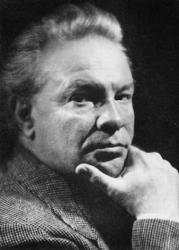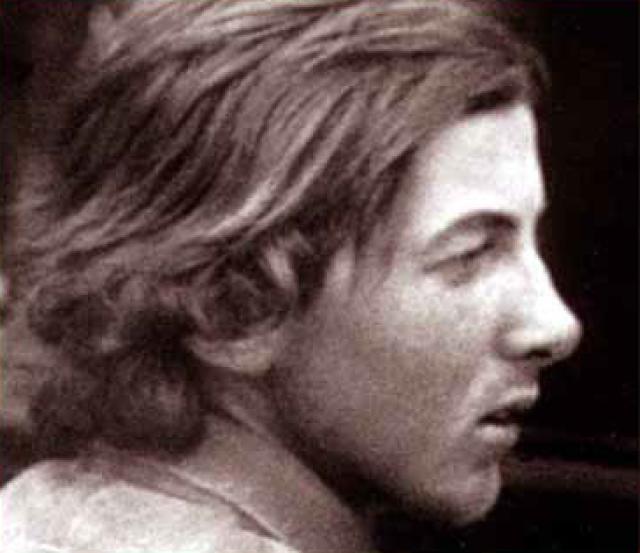
Henry Cowell
 USA
USA- Henry Cowell: American Composer and Music Innovator
- Education and Travel
- Teaching and Collaboration
- Imprisonment and Personal Life
- Global Influence and Music Publishing
- Musical Innovations
- Irish and Asian Influences
- Recognition and Legacy
Henry Cowell: American Composer and Music Innovator
Early Life and InfluencesBorn to an Irish immigrant father and a schoolteacher mother, Henry Cowell developed a passion for music early on. He began playing violin at age five and composing music as a teenager. His father strongly influenced his love for Irish music. Cowell's early works exhibited a unique and individual style, notably in compositions written in 1914.
Education and Travel
Cowell studied harmony under Charles Seeger, Edward Griffith Stricklen, and counterpoint under Wallace Sabin at the University of California, Berkeley. He also received tutelage from Raymond Huntington Woodman in New York and Erich Moritz von Hornbostel in Berlin. Throughout his life, Cowell's travels to Europe and Asia expanded his musical horizons, introducing him to diverse musical traditions.
Teaching and Collaboration
Cowell taught at prestigious music institutions throughout the United States, including Stanford University, the New School for Social Research, and the New York University Institute of Fine Arts. Among his notable students were George Gershwin, John Cage, Lou Harrison, and Dominick Argento. During his time in New York, Cowell immersed himself in the music scene, collaborating with electronic music pioneer Léon Theremin and inventing the Rhythmicon, an instrument capable of producing multiple rhythms simultaneously.
Imprisonment and Personal Life
In 1936, Cowell was imprisoned for homosexuality. Despite the challenging circumstances, he continued to compose, drawing inspiration from American folklore. In 1941, he married musicologist Sidney Hawkins Robertson, with whom he co-authored a biography of Charles Ives.
Global Influence and Music Publishing
In 1956, Cowell embarked on a world tour, showcasing his innovative music around the globe. He wrote over 1,000 musical compositions and musicological works, spanning various genres and styles. He also founded the Pan-American Association of Composers and the New Music Edition, which published works by contemporary composers, including Charles Ives.
Musical Innovations
Cowell's compositions explored the boundaries of harmony, rhythm, and form. He was known for introducing dissonant harmonies known as "tone clusters" and pioneering the concept of "elastic" or "mobile" music, allowing for flexible performance of compositional sections. His experiments with sound production included playing directly on the piano strings, using his hands and forearms to create unique timbres.
Irish and Asian Influences
Irish, Celtic, and Asian music played a significant role in Cowell's work. He incorporated elements of these traditions into his compositions, such as the use of ragas in his "Madras" Symphony and the incorporation of the Japanese koto instrument in his two concertos for koto and orchestra.
Recognition and Legacy
Cowell was recognized as one of the most influential composers of his time. His experimental works were celebrated as a "bible" for young musicians. Béla Bartók sought his permission to use tone clusters, and his "Scherzo" from the "Symphonietta" was performed in Vienna under Anton Webern's direction. In 1951, Cowell was elected to the National Institute of Arts and Letters. Today, his legacy as an innovator and mentor continues to inspire artists worldwide.