
Herbert Henry Asquith
 Great Britain
- Biography of Herbert Henry Asquith
- Early Life and Education
- Legal Career and Personal Life
- Political Career
- Legacy and Achievements
Biography of Herbert Henry Asquith
Herbert Henry Asquith was a British statesman and politician, best known as the Prime Minister of the United Kingdom from 1908 to 1916. Born on September 12, 1852, into a middle-class family belonging to the Yorkshire Congregationalist community, he was initially known by his first name, Herbert, but his second wife preferred to address him by his middle name, Henry.
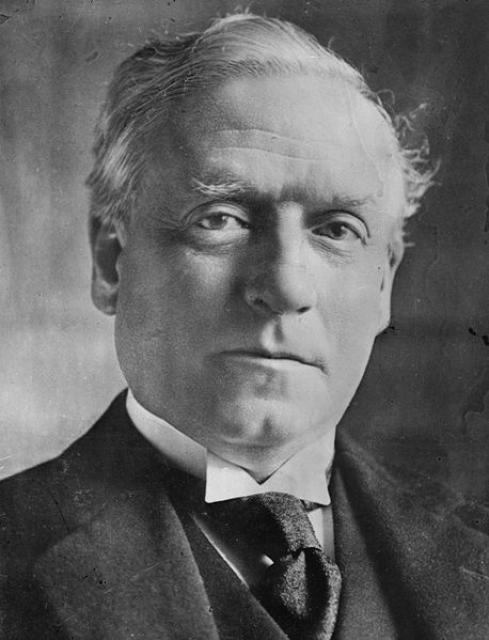
Early Life and Education
Asquith's father was a wool trader who eventually owned his own wool-dyeing factory. When Asquith was seven years old, his father passed away, and his mother moved with the children to her father's house in Huddersfield. In 1863, he was sent to London to live with his uncle and became a student at the City of London School, where he graduated in 1870. Thanks to a scholarship, he was able to continue his education at Oxford, where he developed his sympathies for the Liberal Party, despite its lack of popularity at the time.
Legal Career and Personal Life
Choosing a legal career, Asquith passed his bar examinations in 1876 and became a successful barrister over the next ten years, taking on high-profile cases that garnered significant media attention. In 1890, he was appointed Queen's Counsel, a prestigious rank in the legal profession.
In 1877, Asquith married Helen Kelsall Melland, the daughter of a Manchester physician. They had four sons and a daughter before Helen tragically died of typhoid fever in 1891. Their eldest son, Raymond, was killed during World War I in 1916, making Asquith's grandson, the son of Raymond, the inheritor of the earldom granted to Herbert Henry Asquith. Julian, the second eldest son, lived a long life and passed away three years ago in 2011.
Asquith's second marriage to Margot Tennant, a well-known socialite and writer, in 1894, elevated his social status. Margot gave birth to two more children, a son and a daughter. However, Asquith was also known for his numerous love affairs, and many of his contemporaries, including Clementine Churchill, complained about his womanizing tendencies.
Political Career
Asquith was elected to Parliament in 1886, representing one of the Scottish constituencies. In 1892, he was appointed Home Secretary, his first ministerial position. In 1898, Asquith declined the opportunity to lead the Liberal Party, which was highly unpopular and in a state of turmoil at the time, opting to earn a living as a barrister.
In 1906, the Liberal Party, after regrouping, achieved a significant victory in the elections, and Asquith became the Chancellor of the Exchequer. He initiated several important reforms and, in April 1908, when his predecessor resigned due to illness, Asquith assumed the position of Prime Minister of the United Kingdom. He embarked on a series of liberal reforms that included the establishment of a social insurance system, women's suffrage, and the curtailment of the powers of the House of Lords.
Although Asquith successfully led the country through the challenges of World War I, a series of military and political crises led to his replacement by David Lloyd George, also a Liberal, at the end of 1916. In 1925, Asquith was elevated to the peerage and received an earldom. During the last years of his life, he was confined to a wheelchair after suffering a stroke. When he passed away on February 15, 1928, it was revealed that his inheritance was not as substantial as expected, as his lavish lifestyle had taken its toll.
Legacy and Achievements
Asquith's achievements during peacetime were overshadowed by his weaknesses during the war. Many historians depict him as an indecisive Prime Minister, incapable of taking active measures and firm decisions. However, this portrayal is only partially true. In peacetime, he proved to be an excellent organizer, and many of the reforms and initiatives completed by Lloyd George, "the man who won the war," were actually initiated and developed by Asquith. Unfortunately, the chaos and constant postponement of decisions during the war tarnished his reputation in the eyes of contemporaries and future generations.


