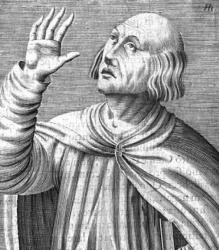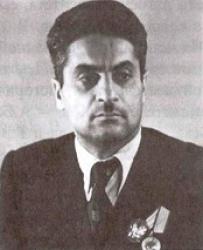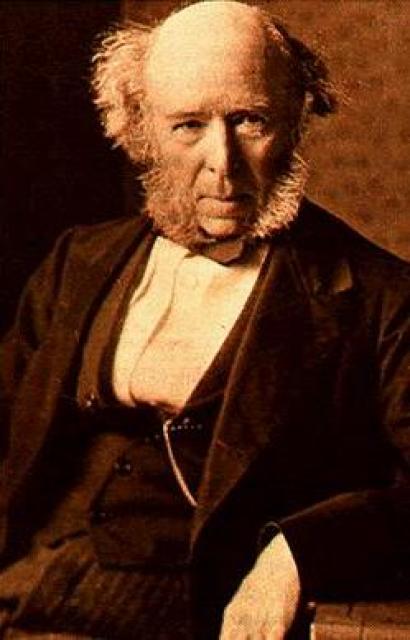
Herbert Spenser
 Great Britain
- Herbert Spencer: A Pioneering Positivist
- Philosophical Influences and Ideas
- "First Principles" and the Theory of Cosmic Evolution
- "The Principles of Biology" and Evolutionary Theory
- "The Principles of Sociology" and Organicism
- "Social Darwinism" and Laissez Faire
- Individualism and Social Evolution
- Legacy and Impact
Herbert Spencer: A Pioneering Positivist
Early Life and EducationHerbert Spencer was born in Derby, Derbyshire, England, on April 27, 1820, into a family of teachers. Despite receiving an offer to attend Cambridge, Spencer declined, choosing instead to pursue a career as a journalist and philosopher.
Philosophical Influences and Ideas
Spencer was heavily influenced by the works of Auguste Comte, the founder of positivism. He rejected the notion of a supernatural reality beyond scientific investigation. His philosophy was characterized by a belief in the interconnectedness of all knowledge and a focus on the evolution of biological and social systems.
"First Principles" and the Theory of Cosmic Evolution
In "First Principles" (1862), Spencer outlined his theory of "Cosmic Evolution," which proposed that all phenomena in the universe, including biological and social entities, evolved over time through a process of gradual change. He believed that evolution was driven by the principles of integration and differentiation, leading to increasing complexity and specialization.
"The Principles of Biology" and Evolutionary Theory
In "The Principles of Biology" (1864-1867), Spencer proposed a theory of evolution that closely resembled Lamarck's theory of inheritance of acquired characteristics. He later acknowledged the significance of natural selection as a factor in evolution and coined the phrase "survival of the fittest."
"The Principles of Sociology" and Organicism
Spencer was a pioneer in the field of sociology. In "The Principles of Sociology" (1876-1896), he argued that society was an organic whole, analogous to a living organism. He believed that societies evolved from simple to complex forms through a process of adaptation to the environment.
"Social Darwinism" and Laissez Faire
Spencer's theory of evolution influenced his social philosophy. He advocated for a laissez-faire approach to government, believing that individuals should be free to compete and survive based on their own abilities. This belief, known as "social Darwinism," justified the inequalities and injustices of capitalism.
Individualism and Social Evolution
In "The Principles of Ethics" (1892-1893), Spencer emphasized the importance of individualism and personal responsibility. He believed that social evolution represented a process of increasing "individuation," where each person's unique qualities and autonomy were valued.
Legacy and Impact
Herbert Spencer's ideas had a profound impact on the intellectual landscape of the late 19th century. His philosophy became widely known and influential, shaping the development of positivism, sociology, and evolutionary theory. His writings continue to be debated and studied by scholars today.