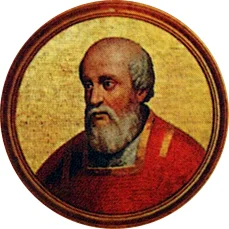
Honorius II
- From Fagnano to the Papal Court
- Reform and New Religious Orders
- The Normans and Southern Italy
- A Schism after His Death
- A Pragmatic Papacy
Honorius II led the papacy through a period of political bargaining and institutional change. A churchman experienced in diplomacy, he helped consolidate the settlement of the investiture controversy, supported new religious orders and contested the rising power of the Norman rulers in southern Italy. His own election was disputed, and the rivalry between Roman factions resurfaced after his death in the schism that divided the papacy.
From Fagnano to the Papal Court
Born Lamberto Scannabecchi in Fagnano, near Imola in northern Italy, Honorius came from a modest background. The exact year of his birth is unknown. He pursued a clerical career, serving as archdeacon of Bologna and later as cardinal bishop of Ostia. His diplomatic experience included work on the Concordat of Worms, the 1122 agreement that brought the long struggle between pope and emperor over investiture to a close.
After Pope Callixtus II died in 1124, the cardinals elected Lamberto, who took the name Honorius II. The election was turbulent: a rival candidate was briefly put forward, and the Roman Frangipani family intervened in support of Honorius. The dispute was eventually settled, but it exposed the degree to which noble families and political alliances could shape papal succession.
Reform and New Religious Orders
Honorius sought to strengthen church discipline and extend the reach of papal authority. He confirmed the Premonstratensian order, founded by Norbert of Xanten, which combined communal religious life with active pastoral work. In 1128, the Council of Troyes gave formal recognition to the Knights Templar, a military religious order established to protect Christian pilgrims and defend territories in the Holy Land. The order’s rule, shaped with the involvement of Bernard of Clairvaux, provided a framework for its rapid growth.
Honorius also supported the election of Lothair III as king of the Germans after the death of Emperor Henry V in 1125. The pope’s engagement with royal succession was part of a broader effort to maintain the church’s influence in the political order established after Worms.
The Normans and Southern Italy
In southern Italy, Honorius confronted Roger II of Sicily, whose growing power threatened papal claims over the region. In 1127, Honorius opposed Roger’s succession to the duchy of Apulia and sought to enforce the papacy’s position as feudal overlord. The pope’s campaign failed, and after Roger’s forces gained the upper hand, Honorius recognized him as duke in return for an oath of fealty. The compromise acknowledged the limits of papal military power while preserving a formal claim to authority.
A Schism after His Death
Honorius died in Rome in February 1130. His death reopened factional rivalries within the College of Cardinals. One group elected Innocent II, while another backed Anacletus II, producing a schism that lasted for years and drew support from rival rulers and church leaders across Europe.
A Pragmatic Papacy
Honorius II’s pontificate was marked by practical negotiation as much as reform. He advanced the institutional standing of religious orders, worked with secular rulers when necessary and defended papal claims where possible. His career illustrates the complex position of a medieval pope: a spiritual leader whose authority depended on diplomacy and alliances as well as religious influence.