Igor Luchenok
 Belarus
- Early Life and Education
- A Composer Finds His Audience
- Teacher and Cultural Leader
- Recognition and Legacy
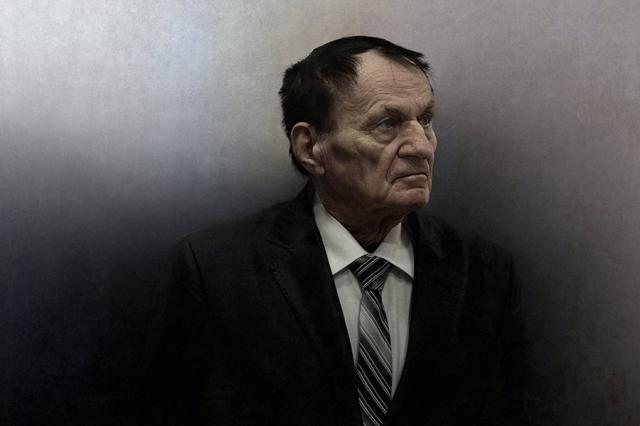
Igor Luchenok was a composer whose songs became part of the sound of Belarusian life. His melodies traveled from concert halls and radio programs into family gatherings and public celebrations, carried by some of the best-known voices and ensembles of the Soviet era. Across a career that joined formal conservatory training with a strong feel for Belarusian song, he wrote more than 400 songs as well as works for orchestra, stage, screen, and children.
Early Life and Education
Luchenok was born on August 6, 1938, in Maryina Gorka, in the Minsk region, into a family of doctors. Music found him early: he learned to play the cymbals, violin, and button accordion, and at 13 entered the special music school attached to the Belarusian State Conservatory in Minsk. That early grounding in local musical traditions accompanied a rigorous classical education.
He graduated from the conservatory in 1961, studying piano and composition. He then continued his training at the Leningrad Conservatory, where he worked with composer and professor Vadim Salmanov, and later completed postgraduate study at the Moscow State Conservatory under Tikhon Khrennikov. The combination of a broad Soviet conservatory education and Belarusian musical idioms would become a defining feature of his style.
A Composer Finds His Audience
Luchenok wrote in several forms, including vocal-symphonic, chamber-instrumental, and chamber-vocal music. Song, however, became his most prolific and widely heard field. His breakthrough came in 1966, when singer Viktor Vuyachich performed Luchenok’s ballad “Memory of the Heart” at the All-Union Soviet Song Contest and won its first prize. The recognition opened a path to a broad audience and established the young composer as a major new voice.
His songs often paired lyrical, memorable melodies with themes of home, love, memory, and national belonging. “My Native Corner,” with lyrics by Yakub Kolas, and “Heritage,” setting words by Yanka Kupala, became especially cherished in Belarus. Other popular works included “Alesya,” “May Waltz,” “Cranes Fly Over Polesie,” “Verasy,” and “Veronika.” Their success depended not only on the tunes themselves but also on their intimate connection to Belarusian poetry and landscape.
The songs reached listeners through a remarkable range of performers. Luchenok wrote for the vocal-instrumental ensemble Syabry, while singers including Joseph Kobzon, Sofia Rotaru, Eduard Khil, and Viktor Vuyachich brought his work to stages and recordings across the Soviet Union. His repertoire balanced the sweep of the concert stage with the directness of a song people could remember and sing together.
His work extended well beyond popular song. He composed cantatas, chamber works, music for theatrical performances, radio and television productions, films, and children’s programs. Among his larger vocal works were the cantatas “The Mound” and “The Soldier’s Heart,” the poem “The Guslar,” and the vocal-symphonic poem “War Is Not Needed.” He also wrote the anthem of the Union State of Belarus and Russia.
Teacher and Cultural Leader
Alongside composing, Luchenok worked as a teacher and held leadership roles in Belarusian musical life. In 1980 he became head of the Belarusian Union of Composers, a position he held for the rest of his life. From 1982 to 1986 he served as rector of the Belarusian State Conservatory, guiding the institution where his own professional education had begun. He was also a professor and doctor of science.
His public presence grew through decades of concerts and cultural events. He was closely associated with the Slavianski Bazaar festival in Vitebsk, where he served on the young performers’ competition jury, later chaired it, and appeared in gala concerts. In 2008, his anniversary concert, “Restless Heart,” opened the festival program. In 2011, he received the festival’s special “Through Art to Peace and Mutual Understanding” award and a star on Vitebsk’s Walk of Fame.
Recognition and Legacy
Luchenok received the title People’s Artist of the Belarusian SSR in 1982 and People’s Artist of the USSR in 1987. His honors also included the State Prize of the Belarusian SSR, the Lenin Komsomol Prize, the Order of Francysk Skaryna, and other state and cultural awards. He was named an honorary citizen of Minsk, Maryina Gorka, and Salsk, and a star bearing his name was installed at Moscow’s Square of Stars in 1999.
He died in Minsk in November 2018, aged 80. By then, his work had become part of Belarus’s shared musical memory. The breadth of his catalogue reflects a composer equally at home in formal concert genres and popular song; the lasting appeal of his best-known melodies rests on how naturally they joined polished craft with the rhythms, poetry, and emotional life of his homeland.