Irina Vilinskaya
- Early Life and Musical Beginnings
- Education and Career
- Wartime Evacuation and Postwar Career
- Vocal Pedagogy
- Compositions and Publications
- Legacy and Influence
- Vilinskaya's remains rest at the Baikovo Cemetery in Kiev, Ukraine.
Early Life and Musical Beginnings
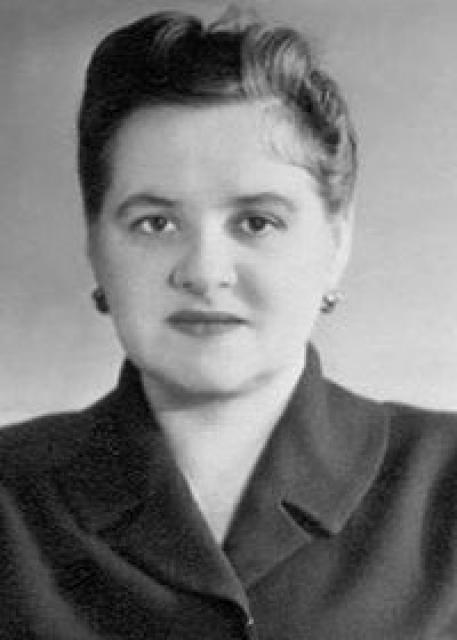
Ukrainian musician Irina Nikolaevna Vilinskaya was born in Odessa on September 7, 1920, to the renowned composer Nikolai Nikolaevich Vilinsky. From a young age, she exhibited exceptional musical ability, beginning piano lessons at five after imitating melodies heard at the Odessa Opera and Ballet Theater. Her father played a pivotal role in nurturing her love for music and honing her talent.
Education and Career
Alongside her musical pursuits, Vilinskaya excelled academically and athletically. After completing elementary school, she attended a construction college and later enrolled in the Odessa Construction Institute. However, her passion for music, particularly singing, prevailed, leading her to enter the Odessa Music College in 1939, studying both vocal performance (under Yevdokiya Menner-Kanevskaya) and music history and theory.
In 1941, Vilinskaya commenced her studies at the Odessa Conservatory, pursuing both vocal performance and composition. Her talent for singing eventually propelled her to prioritize it over composition. Her cousin, the renowned opera singer Ksenia Derzhinskaya, may have influenced this decision.
Wartime Evacuation and Postwar Career
During World War II, Vilinskaya and her family evacuated to Tashkent, where she continued her vocal studies under Professor D. L. Aspelund at the Tashkent Conservatory (1941-1944). She later transferred to Kiev, studying with Professor D. G. Yevtushenko and completing her graduate studies at the Kiev Conservatory.
Subsequently, Vilinskaya joined the faculty of the Kiev Conservatory as a vocal coach, ascending the ranks to become an associate professor (1964) and later a full professor (1974).
Vocal Pedagogy
Vilinskaya viewed the voice as a delicate instrument that required careful nurturing. She developed a vocal training method that emphasized preserving and gradually developing a singer's natural abilities. Through carefully selected repertoire, vocal exercises, and specific warm-ups, she aimed to foster both technical proficiency and artistic longevity.
Compositions and Publications
In addition to her pedagogical contributions, Vilinskaya composed vocalizations, arranged Ukrainian and Russian folk songs and romances, and authored theoretical works on vocal pedagogy. Her renowned series of vocalization collections for various voice types drew upon her unique combination of vocal, compositional, and pianistic skills. Notably, the distinguished Ukrainian composer Leonid Revutsky praised Vilinskaya's vocalizations, recommending their publication.
Legacy and Influence
Vilinskaya's vocalizations have been widely used for singer training in conservatories and music schools throughout Russia, Ukraine, and abroad for decades. Her pedagogical legacy continues to inspire vocalists and educators alike. Notable students include A. Ponomarenko, V. Bogomaz, A. Manyachenko, V. Titkin, A. Makarov, S. Bondarenko, and V. Mishchenko.