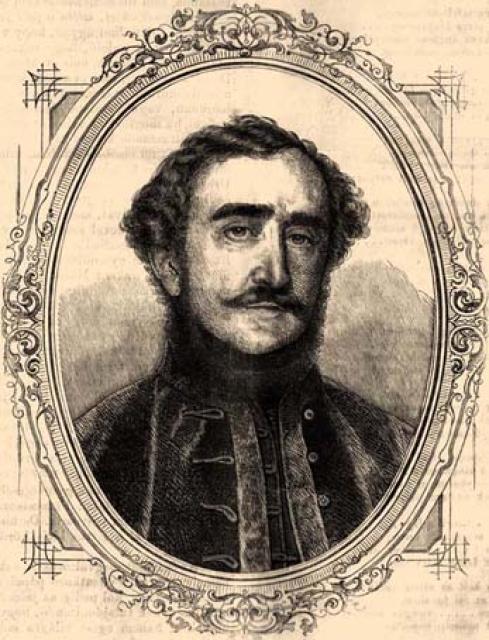
Istvan Szechenyi
 Hungary
- István Széchenyi: The Reformer of Hungary
- Political Beginnings
- Modernization and National Development
- The Danube Regulation Project
- Urban Development and the Chain Bridge
- Political Crisis and Suicide
- Legacy and Honors
- Personal Life
István Széchenyi: The Reformer of Hungary
Early Life and EducationIstván Széchenyi, a Hungarian politician and writer, was born into an aristocratic family in 1791. His father founded the Hungarian National Museum and Library, while his mother came from a wealthy noble family. Széchenyi received a private education before joining the Austrian army and fighting in the Napoleonic Wars.

Political Beginnings
In 1825, Széchenyi made a significant contribution to Hungarian culture by donating his entire annual income to the Hungarian Academy of Sciences. He founded the "Nemzeti Kaszinó" in 1827, a political club that played a crucial role in fostering reformist ideas among the Hungarian nobility.
Modernization and National Development
Széchenyi's travels to Western Europe exposed him to advancements in modernization, which he believed Hungary desperately needed. He urged the Hungarian nobility to abandon feudal privileges and embrace progress. Széchenyi emphasized economic, social, and cultural development, as well as infrastructure improvement.
The Danube Regulation Project
One of Széchenyi's most ambitious projects was the regulation of the Danube River, which suffered from frequent flooding. He successfully lobbied for government support and oversaw the construction of dams, transforming the river into a vital trade route.
Urban Development and the Chain Bridge
Széchenyi played a significant role in transforming Budapest into a modern political, economic, and cultural center. He supported the construction of a permanent bridge connecting Buda and Pest, which later became known as the Széchenyi Chain Bridge.
Political Crisis and Suicide
Széchenyi opposed Lajos Kossuth's radical nationalism and supported the Hungarian government during the 1848 Revolution. However, the conflict between Hungary and Austria escalated, leading to Széchenyi's exit from the government and a nervous breakdown. He committed suicide in 1860.
Legacy and Honors
Széchenyi's legacy is marked by his contributions to Hungarian modernization and nation-building. Monuments and places bearing his name, including the Széchenyi Chain Bridge, serve as reminders of his impact. In 2002, a film titled "A Híd Ember" (The Bridge Man) was released, depicting Széchenyi's life and achievements.
Personal Life
Széchenyi married Countess Crescentia Seilern in 1836. His son, Béla, became a renowned explorer of Asia, publishing accounts of his travels in the late 19th century.