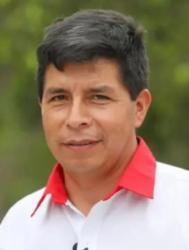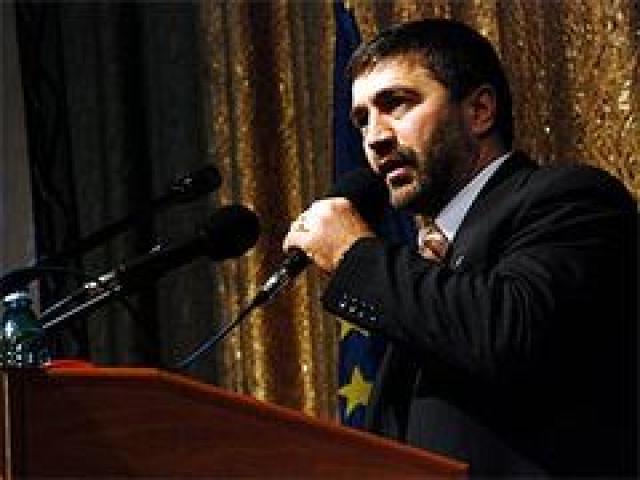
Iurie Rosca
 Moldova
Biography of Yuri Roshka
Yuri Roshka was born on October 31, 1961, in the Moldovan city of Teleneshty. He comes from a family with a father who worked as a secretary of the city committee. Roshka completed his studies in journalism at the Kishinev State University in 1985. During his time as a student, he allegedly became a person of interest for the university's curator from the KGB. After graduating, Roshka worked as a correspondent for the newspaper "Tinerimea Moldovei" ("Youth of Moldova"), where he was supposedly recruited by the secret services. He was also known by his operational pseudonyms, "Budulay" and later "Predvoditel" but there were no documentary confirmations of this information.
In 1986, Roshka became an employee of the literary editing department of "Teleradio-Moldova" and soon became the secretary of the Komsomol organization. Some sources linked Roshka's political career to a directive received in 1986 by the Kishinev branch of the KGB, which aimed to select young people capable of becoming leaders of democratic movements in the future. According to some reports, Roshka was "infiltrated" into the ranks of the National Liberation Movement in 1988 for this purpose. He left television and started working at the Dimitrie Cantemir Museum, created under the auspices of the Union of Writers of Moldova, which was mentioned in the press as a stronghold of the Moldovan national movement. In the same year, he was elected to the initiative group of the Moldovan Democratic Movement, and in 1989, he became one of the founders of the Moldovan Popular Front (NF) after leaving the Komsomol ranks.
In 1990, as a representative of the NF, Roshka was elected a deputy of the Supreme Soviet of the Moldavian SSR, which was later renamed the Parliament of the Republic of Moldova after the collapse of the USSR and the proclamation of independence. According to the newspaper "Moldavian News," during the Second Congress of the NF in the same year, Georgy Gimp, who held the position of the NF secretary at that time (later became the founder of the Democratic Party of Moldova), raised the issue of insufficient "transparency of financial expenditures for which Yuri Roshka, the 'cashier' of the NF, was responsible." Not receiving any answers to his questions, Gimp left the ranks of the NF on the same day. In February 1992, at the Third Congress of the Moldovan Popular Front, it became the Christian Democratic People's Front. At that time, Roshka was elected as the vice-chairman of the Christian Democratic People's Front (Mircea Druc became the Chairman). In 1993, a split occurred in the ranks of the Christian Democratic People's Front, as moderate supporters of union with Romania left the party due to disagreements with the leadership's policy of unconditional unification of Moldova with Romania and the approach to the Romanian Orthodox Church. Alongside this, Druc left the position of NF chairman due to his acquisition of Romanian citizenship and his inability to "directly manage the activities of the front" in the future. Roshka took his place in the party leadership (he was repeatedly re-elected as its leader). In 1999, the organization led by Roshka was renamed the Christian Democratic People's Party (CDPP). The politician was last re-elected as the leader of the party in 2007.
In 1994, Roshka was elected as a deputy of the Moldovan Parliament of the XIII session. In the following years, he was repeatedly re-elected to the parliament, served as a member of its permanent bureau, and led the CDPP faction. From 1998 to 2001, he held the position of vice-chairman of the Moldovan Parliament. In the early 2000s, there were media mentions of the "close ties between the Communists and the frontists," who attempted joint actions against common enemies. After members of the CDPP, led by Roshka, voted in favor of electing the leader of the Party of Communists of the Republic of Moldova (PCRM), Vladimir Voronin, for a second presidential term in April 2005, Roshka became the vice-speaker, and the CDPP and PCRM were mentioned in the press as partner parties. Explaining the decision of his party, which previously stated that they would not participate in the presidential elections, Roshka stated that he was "guided by the desire to ensure stability in the country, necessary for its European integration." The media later noted that "it was thanks to the alliance with Roshka's party that the Communist Party retained power." Roshka was mentioned in the media as an anti-communist and Russophobe. It was reported that he organized anti-communist protest rallies in 2002-2003 against Russian language lessons in schools and the signing of the "Kozak Memorandum" (a Russian plan for the unification of Moldova and Transnistria prepared with the participation of Dmitry Kozak, the special representative of the President of Russia). After joining the camp of the Moldovan president and stating that he "united with Voronin against Putin," Roshka was also mentioned in the press as the "handpicked Russophobe" of the Moldovan president.
In 2006, Roshka became involved in a scandal related to the case of the former Minister of Defense of Moldova and advisor to the head of the management board of RAO "UES of Russia," Valery Pasat. It was reported that Roshka made statements that Pasat, who was sentenced to 10 years in January of the same year for abuse of power (money laundering in connection with the sale of Moldova's MiG-29 aircraft to the United States in 1998), was planning to assassinate him to destabilize the political situation in Moldova. According to Roshka, Pasat repeatedly offered him to "lead the revolution," and after numerous refusals, he decided to kill him, overthrow the president, and seize power. However, after Pasat's sentence was reduced to 5 years in October 2006 and he was amnestied and released in July 2007, the investigation into the criminal case of preparing the assassination of Roshka and a coup was suspended. Commenting on this news, Roshka stated that Voronin "under constant pressure" from Russian President Vladimir Putin "was forced to release Pasat, who represented the interests of Russian special services in Moldova." At the same time, he acknowledged that Pasat's arrest in March 2005 had a "political background." In January 2009, the assassination plot received a continuation when the leader of the "Our Moldova" Alliance (ANM) party, Seraphim Urekian, was accused of plotting to kill Roshka. After the Moldovan Prosecutor's Office combined the case of preparing Roshka's assassination with the case of preparing a coup, Urekian was also accused of "actions aimed at destabilizing the constitutional order." According to the Prosecutor General Valeriu Gurbulea, law enforcement agencies managed to track down the alleged killer and establish the fact of his calls to Pasat, Urekian, and Plesca. However, the leader of ANM insisted on his innocence and claimed to be persecuted for political reasons. During the election campaign preceding the parliamentary elections of the XVI session held in April 2009, Roshka led the list of the CDPP. According to some analysts, the party had "some chances, about 50-50," to enter the new parliament, despite the dissatisfaction of a significant part of Roshka's party supporters with the CDPP and PCRM alliance. However, according to the announced results of the voting, the CDPP failed to surpass the electoral threshold to enter Parliament (6 percent for parties and 3 percent for independent candidates). Only four parties, including PCRM, made it into Parliament, with PCRM receiving the majority of the votes (almost 50 percent) from Moldovan voters. Despite independent observers confirming that the elections were conducted without violations, the opposition, dissatisfied with the election results, organized protest actions in Chisinau. Two days later, the protests turned into street riots, during which demonstrators vandalized and set fire to the Parliament and the President's administration. After the incident, opposition leaders declared a loss of control over the situation and called for support of "peaceful protests" to demand a recount of ballots and verification of the accuracy of voter lists. The Communists accused the opposition of organizing a coup, and Roshka stated that the disturbances in Chisinau "were organized by Russia," which had planned the assassination of the Moldovan president back in 2005.
In the same month, at the request of President Voronin, the Constitutional Court of Moldova decided to recount the votes in the elections. As a result of the ballot recount, the Communists confirmed their result (49.48 percent of the votes). The CDPP did not make it into Parliament, receiving only 3.04 percent of the votes. In May 2009, a vote was held in Parliament for the future president of the republic. Despite the unanimous support of the candidate proposed by the president, Zinaida Greceanii, she did not become the president. She lacked one parliamentary vote since three opposition factions boycotted the vote. Commenting on the incident, Roshka called the failed election of the Moldovan president a "Moscow scenario." After the candidate nominated by the president was rejected twice, Parliament was dissolved: it was announced that early parliamentary elections would be held in the country. Some analysts speculated that the CDPP would be able to enter Parliament this time. In June 2009, the incumbent president, Voronin, announced the appointment of Roshka as the Deputy Prime Minister of Moldova, the deputy of Greceanii, who was appointed as the head of the country's government. According to the head of state, Roshka would be responsible for the law enforcement block in the Moldovan government, which included the Ministry of Internal Affairs, the Ministry of Defense, the Center for Combating Economic Crimes and Corruption (CCECC), the Customs and Border Guard Services, the Agency for Material Resources, Government Procurement, and Humanitarian Aid.
According to some reports, Roshka is a wealthy citizen of Moldova. It was reported that he controls the Moldovan television channel EuTV and "at least seven buildings in Chisinau, with a total area exceeding 2000 square meters" (most of which he transferred to the balance of non-governmental organizations and commercial enterprises controlled by him). According to sources from the newspaper Timpul, a significant part of this property was acquired with funds received from abroad to "support the national movement" in Moldova. The publication also noted that Roshka possibly "earns huge profits from real estate transactions, controls a number of construction companies, as well as the mobile communication company 'Eventis'." Details were not disclosed, and there were no documentary confirmations of this information.
Roshka is fluent in Russian, English, and French. He is married and has three children.