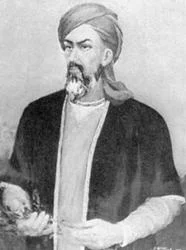
Jaafar Al-Sadiq
Jaʿfar al-Sadiq became one of the most respected religious scholars of eighth-century Medina, a teacher whose influence crossed emerging boundaries within Islam. Twelver Shiʿa Muslims remember him as their sixth Imam, while Sunni traditions also cite him as a transmitter of hadith and a learned authority. His life unfolded during the transition from Umayyad to Abbasid rule, a time of political revolt and profound change.
A family rooted in Medina
Jaʿfar ibn Muhammad was born in Medina around 702, though some accounts place his birth a few years earlier. His father was Muhammad al-Baqir, a leading scholar and the fifth Imam in the line recognized by Twelver Shiʿa. Through his father, Jaʿfar traced his ancestry to Ali ibn Abi Talib and Fatima, the daughter of the Prophet Muhammad. His mother, Umm Farwa, was also connected by ancestry to the family of the first caliph, Abu Bakr.
Jaʿfar grew up in a household known for religious learning. After his father’s death around 735, he became a prominent teacher and the spiritual leader of his followers. He lived through the last decades of Umayyad rule and the Abbasid revolution of 750, which brought a new dynasty to power. Although the period offered opportunities for political change, he did not lead an armed revolt or seek to establish himself as a ruler.
A teacher and religious authority
In Medina, Jaʿfar taught jurisprudence, theology, and traditions attributed to the Prophet. Students and visitors came to hear him, and accounts from different Muslim traditions preserve his reputation for knowledge and judgment. Sunni scholars included reports transmitted from him in their hadith traditions, while Shiʿa communities looked to him as a central guide on religious law and leadership.
Later traditions associate him with several celebrated scholars, including Abu Hanifa and Malik ibn Anas, though the details of their encounters are described differently across sources. The legal tradition known as Jaʿfari jurisprudence takes its name from him and reflects the lasting authority attributed to his teachings. Some later writers also credited him with expertise in fields such as alchemy and natural philosophy, but these claims are difficult to verify from contemporary evidence.
Jaʿfar’s leadership coincided with competing ideas about who should guide the Muslim community. Some supporters of the Prophet’s family favored armed uprisings against the ruling powers; Jaʿfar is generally remembered as having chosen scholarly teaching and caution instead. His followers’ disagreements over succession after his death contributed to the development of distinct Shiʿa branches.
Legacy beyond his lifetime
Jaʿfar died in Medina in 765 and was buried in the cemetery of al-Baqi. Shiʿa accounts say that the Abbasid caliph al-Mansur had him poisoned, but the circumstances of his death cannot be established with certainty. His burial place became an important site of remembrance until the historic cemetery’s structures were later destroyed.
The succession dispute after Jaʿfar’s death divided his followers. Twelver Shiʿa recognized his son Musa al-Kazim as the next Imam, while another group followed his son Ismaʿil or Ismaʿil’s descendants, developing into Ismaʿili Shiʿism. Jaʿfar’s legacy nevertheless reaches across traditions: he is remembered as a pivotal Imam by Shiʿa Muslims and as a respected scholar and transmitter by many Sunnis. His life shows how religious authority in the early Islamic centuries could grow through teaching and scholarship as much as through political power.