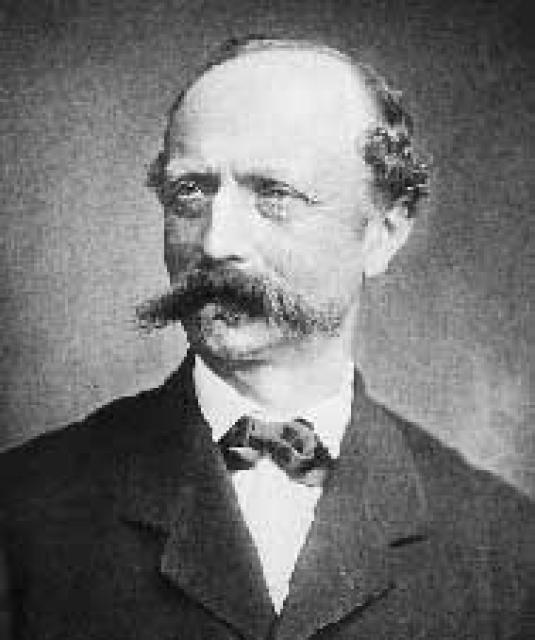
Jacob Bronnum Scavenius Estrup
 Denmark
- Early Life and Inheritance
- Minister of the Interior and Railway Development
- Chairman of the Council and Minister of Finance
- 'Danish Bismarck' and Political Battles
- Economic Stability and Resignation
- Legacy and Influence
Early Life and Inheritance
Jacob Brønnum Scavenius Estrup was born on April 16, 1825, in Sorø, Denmark. His father, Hector Frederik Janson Estrup, was a landowner, and Estrup himself inherited the Kongsdal estate in Holbæk County in 1846. Later, he acquired the Skafføgård estate in Randers County, making him a prominent landowner.
Minister of the Interior and Railway Development
In 1865, Estrup became Minister of the Interior in the government of Christian Emil Krag-Juel-Vind-Frijs. He oversaw the construction and expansion of railroads in Jutland and Funen, earning him the nickname 'Railway Minister.' He also played a role in the development of harbors, including the one in Esbjerg.
Chairman of the Council and Minister of Finance
In 1875, Estrup succeeded Christen Andreas Fonnesbech as Chairman of the Council and also assumed the role of Minister of Finance. During this period, Denmark faced financial difficulties due to the Second Schleswig War. Estrup introduced temporary budget measures and faced opposition from the Venstre party, led by Christen Berg and Viggo Hørup.
'Danish Bismarck' and Political Battles
Estrup's leadership was characterized by authoritarianism and a suppression of political dissent. In 1885, he narrowly survived an assassination attempt. In response, he tightened censorship laws and restricted the right to bear arms, expanding police powers. Despite the controversy, Estrup remained a respected figure, known as the 'Danish Bismarck.'
Economic Stability and Resignation
Estrup's government focused on economic stability rather than significant reforms. He resigned in 1894 after a compromise with the Venstre party on the budget.
Legacy and Influence
Estrup died on December 24, 1913, at the age of 88. His authoritarian rule and unwavering confidence left a lasting impact on Danish politics. Despite his controversial methods, he commanded respect from both supporters and opponents, leaving behind a legacy of stability and a lasting influence on the country's development.


