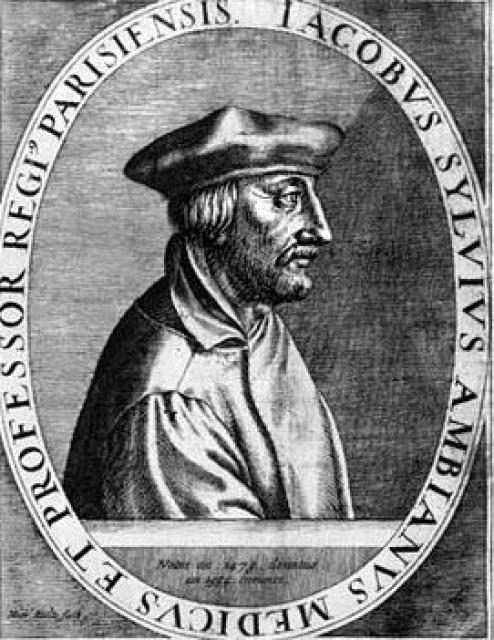
Jacques Dubois
 France
- Jacques Dubois: A Multifaceted Scholar
- Medical Career and Philosophical Beliefs
- Grammatical Contributions
- Etymologica and Grammatica
- Criticisms and Legacy
Jacques Dubois: A Multifaceted Scholar
As a French physician, anatomist, and grammarian, Jacques Dubois left an enduring impact on various fields. Born in Louviers, Normandy, on January 22, 1478, Dubois initially pursued mathematics and languages, following in the footsteps of his elder brother Francis, a professor of rhetoric.
Medical Career and Philosophical Beliefs
After abandoning these pursuits, Dubois dedicated himself to medicine. He earned his doctorate at the University of Montpellier at the relatively advanced age of 51. Returning to Paris, he taught anatomy, initially at the Collège de Tréguier and later, in 1550, as Professor of Surgery at the Collège Royale.
Dubois's approach to medicine was largely based on classical texts, with a particular admiration for Galen. He preferred commentary on these works to independent research and was reluctant to rectify the errors of his predecessors. According to his former student Andreas Vesalius, Dubois relied on dissection of dogs in the anatomy theatre, while students had to obtain human cadavers surreptitiously.
Grammatical Contributions
In 1531, Dubois authored "In linguam gallicam Isagoge," the first printed grammar of the French language. Sponsored by the publisher Geoffroy Tory, this work aimed to standardize French grammar based on principles of Latin. Despite its initial lack of success, the "Isagoge" became influential in later French grammars.
Etymologica and Grammatica
Dubois's "Isagoge" comprised two sections: Etymologica, which attempted to trace correspondences between Latin letters and French pronunciation, and Grammatica latino-gallica, which provided French equivalents for Latin vocabulary and constructions. Dubois believed that contemporary French grammar was "impure" and sought to derive its rules from classical languages.
Criticisms and Legacy
Dubois's inclusion of Picardisms, a regional dialect he considered closer to Latin, drew criticism from subsequent French grammarians. However, his work paved the way for further grammatical studies and established the importance of standardization in French.
Jacques Dubois's contributions to medicine, anatomy, and grammar left a lasting legacy. His commentaries on classical texts influenced medical thought, while his grammatical work laid the foundation for the development of French grammar as a standardized discipline.


