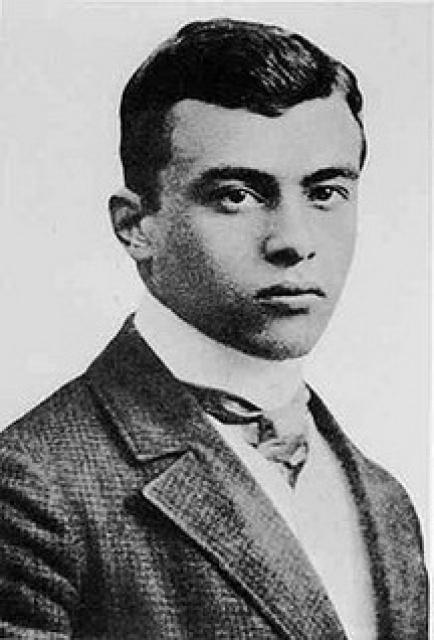
Jakob van Hoddis
 Germany
- Jacob van Hoddis: Jewish-German Expressionist Poet
- Early Life and Education
- Literary Beginnings
- The Pseudonym and "Weltende"
- Literary Success and Mental Illness
- Wanderings and Literary Legacy
- Nazi Persecution and Death
- Legacy and Remembrance
Jacob van Hoddis: Jewish-German Expressionist Poet
Born on May 16, 1887, in Berlin as Hans Davidson, the Jewish-German poet Jacob van Hoddis is renowned for his expressionist works.
Early Life and Education
Van Hoddis attended the Friedrich-Wilhelm-Gymnasium, where he began writing poetry. Despite his early academic success, he faced expulsion in 1905 and voluntarily left. In 1906, he pursued classical philology at the Berlin University of Technology and later at the Friedrich-Wilhelm University.
Literary Beginnings
Van Hoddis joined the "Freie wissenschaftliche Vereinigung," where he met Kurt Hiller and his future mentor, Georg Heym. In 1908, he debuted his poetry at the group's meeting and soon co-founded the "New Club" with Hiller and Erwin Loewenson. The club's "Neopathetisches Cabaret" evenings became a gathering place for early expressionists.
The Pseudonym and "Weltende"
After his father's death in 1909, van Hoddis adopted the anagrammatic pseudonym "van Hoddis" (Davidsohn). His most famous work, "Weltende" ("End of the World"), was published in 1911 in the newspaper "Der Demokrat." The poem became an iconic expressionist work, later translated and published throughout Europe.
Literary Success and Mental Illness
Van Hoddis played an active role in Berlin's literary scene, but his participation led to his eventual expulsion from university. Following Heym's tragic death in 1912, van Hoddis spiraled into deep depression and erratic behavior. He began to exhibit signs of mental illness and was forcibly admitted to a psychiatric asylum in October 1912.
Wanderings and Literary Legacy
Van Hoddis escaped the asylum in December 1912 and wandered throughout Europe. Despite his condition, his works continued to gain recognition. Throughout the 1920s, he spent time in various psychiatric institutions before his permanent placement at the University of Tübingen in 1927.
Nazi Persecution and Death
With the rise of Nazism, van Hoddis's family emigrated to Palestine. However, he remained in the German-occupied Israelit Asylum at Bendorf-Sayn. In 1942, he was transported to Lublin and presumedly executed at the Sobibor concentration camp.
Legacy and Remembrance
Jacob van Hoddis's expressionist poetry continues to be celebrated for its haunting and prophetic qualities. His work remains a testament to the creative spirit that emerged amid the turmoil of early 20th-century Germany. His tragic demise serves as a stark reminder of the horrors inflicted upon those deemed inferior by totalitarian regimes.


