James Brydges
- Early Life and Education
- Aristocratic Ancestry and Titles
- Financial Success and Philanthropy
- Patron of the Arts
- Personal Life and Legacy
Early Life and Education
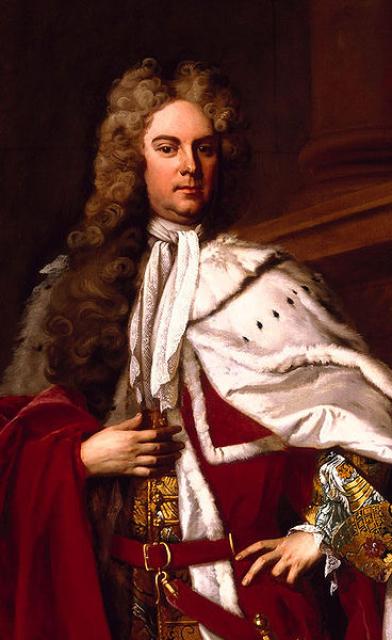
James Brydges, the prominent English aristocrat, was born into a noble family. His father, Sir James Brydges, served as High Sheriff of Herefordshire and held the title of 8th Baron Chandos. James received his education at Westminster School and New College, Oxford, where he showcased his academic prowess. In 1694, he was inducted into the prestigious Royal Society of London.
Aristocratic Ancestry and Titles
James Brydges inherited the title of Baron Chandos upon his father's demise in 1714. Three days later, he entered Parliament as a representative of Herefordshire, a role he held until 1714. Subsequently, he received several honorific distinctions, becoming the 1st Viscount Wilton and eventually the 1st Earl of Carnarvon.
Financial Success and Philanthropy
During the War of the Spanish Succession, James Brydges served as paymaster, significantly boosting his personal fortune. While some of his endeavors raised ethical concerns, exploiting one's official position for personal gain was prevalent during that era. Despite setbacks caused by the South Sea Bubble and York Buildings Company collapse, Brydges continued his financial ventures, notably in his grandiose estate, Cannons.
Patron of the Arts
James Brydges left an indelible mark on the cultural landscape as a patron of renowned figures. He befriended the legendary composer George Frideric Handel, hosting him at his estate and facilitating the creation of masterpieces like "Esther" and "Acis and Galatea." Handel dedicated numerous anthems to his generous sponsor, which were first performed at the Whitchurch parish church, where the organ Handel played still stands today. Another beneficiary of Brydges' patronage was Alexander Pope, the renowned poet and translator.
Personal Life and Legacy
Throughout his life, James Brydges faced both joys and sorrows in his personal relationships. He married Mary Lake in 1695, and later to Cassandra Willoughby and Lydia Catherine van Hatten, but none of these marriages produced any surviving offspring. Despite the challenges, he remained a beloved figure, leaving behind a legacy as a prominent aristocrat, cultural patron, and an intriguing personality in British history. Brydges passed away on August 9, 1744, and was laid to rest near his first two wives at St Lawrence, Whitchurch. While his third wife survived him, she relocated to Berkshire after his demise.


