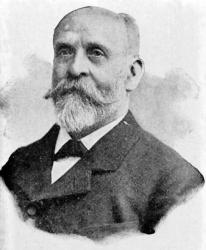
James Van Allen
 USA
USA- Early Life and Education
- World War II and Post-War Research
- Discovery of Radiation Belts
- Later Contributions
Early Life and Education
Birth and Childhood:James Van Allen was born on September 7, 1914, in Mount Pleasant, Iowa.
Academic Achievements:He graduated summa cum laude from Wesleyan College in 1935. He then pursued graduate studies at the University of Iowa, earning a Master of Science degree in 1936 and a Doctor of Philosophy in Physics in 1939.
World War II and Post-War Research
Institute of Carnegie:During World War II, Van Allen worked at the Terrestrial Magnetism Department of the Carnegie Institution.
University of Johns Hopkins:He subsequently joined the Applied Physics Laboratory at Johns Hopkins University, where he developed radio proximity fuzes for weapons.
Rocket Research:In the postwar years, Van Allen led high-altitude experiments using V-2 rockets.
Discovery of Radiation Belts
Explorer Satellites:Van Allen played a pivotal role in the development of Explorer 1, the first American artificial satellite.
Radiation Belt Identification:Using Explorer 1 and Explorer 3, Van Allen's research team discovered two encircling radiation belts in February 1958. The phenomenon became known as the Van Allen Belts.
International Collaboration:The Earth's radiation belt was later studied by Soviet scientists S. N. Vernov and A. E. Chudakov.
Later Contributions
Lunar and Interplanetary Probes:Van Allen designed radiation detectors for early lunar probes and energetic charged particle detectors for the Mariner 2 spacecraft.
Galileo Mission:He participated in the development of the Galileo space probe, which reached Jupiter in 1995.
Legacy:James Van Allen passed away on August 9, 2006, at the age of 92. His groundbreaking discoveries continue to shape our understanding of space and its effects on Earth.