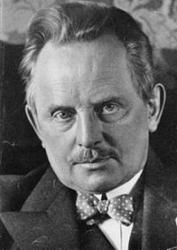
Jan Sloot
 Netherlands
- Jan Sloot: A Revolutionary Mind
- Early Life and Career
- A Technological Leap
- The Sloot Digital Coding System
- Investors and Demonstrations
- Untimely Demise
- Posthumous Legacy
Jan Sloot: A Revolutionary Mind
Jan Sloot was a Dutch inventor and electronics engineer who made extraordinary claims about his breakthrough data packaging technology, the Sloot Digital Coding System. Sloot asserted that this system could compress an entire feature-length film into just 8 kilobytes, a feat that remains unmatched to this day.
Early Life and Career
Born on August 27, 1945, in Groningen, Netherlands, Jan was the youngest of three children. His father, a school principal, abandoned the family shortly after Jan's birth. Sloot briefly attended a technical college in the Netherlands before leaving to work at a radio station. After completing his mandatory military service, Jan settled in Utrecht with his wife.
In 1978, he joined Philips Electronics in Eindhoven for two and a half years, later moving to Groningen to work in an audio-video store. A few years later, Sloot established his own television and stereo repair business in Nieuwegein.
A Technological Leap
In 1984, Sloot shifted his focus to computer technology, working with systems such as the Philips P2000, Commodore 64, IBM PC XT, and AT. He conceived the idea for a nationwide repair service network called RepaBase, with a database containing all repair information. This concept sparked his interest in developing alternative data storage methods that could significantly reduce data volume.
The Sloot Digital Coding System
In 1995, Sloot claimed to have developed a data encoding technique that could shrink an entire movie to eight kilobytes. For comparison, even modern technologies typically require 10,000 times more space to store a video file of very low quality. Converting high-quality footage could require up to 175,000 times more data.
Investors and Demonstrations
Sloot's claims were met with skepticism, but a few investors expressed interest in his work. In 1996, he received funding from Jos van Rossum, a cigarette machine operator. That same year, Sloot and van Rossum obtained a six-year Dutch patent for the Sloot Encoding System.
In March 1999, Sloot reportedly demonstrated the system to Roel Pieper, former Technical Director and Board Member of Philips. Pieper claimed that Sloot showed him and other potential investors 16 feature-length movies stored on a single 64-kilobyte chip. The decoding algorithm was said to have weighed just 370 megabytes.
Untimely Demise
Philips declined to enter into a partnership with Sloot. However, Pieper left Philips in May 1999 and became CEO of Sloot's company, The Fifth Force, Inc.
Just one day before he was scheduled to sign a contract detailing the sale of his groundbreaking technology, Sloot suffered a fatal heart attack in the garden of his Nieuwegein home on July 11, 1999. The key component of the technology, a compiler reportedly stored on a floppy disk, was never recovered despite extensive searches.
Posthumous Legacy
Sloot's death cast a shadow of doubt over the validity of his claims. He left behind a wife and three children. His ideas and the tantalizing possibility of a revolutionary data compression technology continue to spark speculation and intrigue.